How Long Does Gold Plated Jewelry Last and How to Care for It
Gold plated jewelry is a popular choice for those who want the look of gold without the hefty price tag. But how long does it actually last? Typically, gold plated jewelry can last anywhere from one to three years with proper care. The lifespan largely depends on how well you maintain it and how often you wear it.
To extend the life of your gold plated pieces, it’s crucial to avoid exposure to chemicals, moisture, and excessive friction.
Cleaning is also important. Use mild soap and water for a gentle cleanse, and make sure to dry your jewelry thoroughly afterward.
When storing your jewelry, keep it in a cool, dry place and try to store it separately to prevent scratches.
Recognizing when your piece needs replating can help maintain its beautiful look.
With these simple tips in mind, you’ll be better equipped to protect your gold plated jewelry for longer!
What Is Gold Plated Jewelry?

Gold plated jewelry combines a thin layer of real gold with a base metal like brass, copper, or stainless steel to create an affordable yet elegant look.
This layer of real gold, applied through gold plating, usually ranges from 0.5 to 2.5 microns in thickness.
The thickness of the gold affects how long the jewelry lasts and how well it resists wear.
The base metal forms the core of the piece, while the thin layer of gold gives it its luxurious appearance.
Unlike solid gold, gold plated jewelry doesn’t contain gold throughout the metal, so it’s more affordable but less durable.
Understanding the role of the gold plating and the base metal helps you appreciate the balance between cost and elegance in these pieces.
Factors That Cause Gold Plated Jewelry to Tarnish

You’ll notice your gold plated jewelry starts to tarnish faster when it’s exposed to chemicals, moisture, and sweat.
Friction from everyday wear can also wear down the gold layer, letting the base metal show through.
Understanding these factors helps you protect your pieces and keep them looking fresh longer.
Exposure to Chemicals
Although gold-plated jewelry can brighten your look, exposure to everyday chemicals can quickly dull its shine.
Chemicals found in lotions, perfumes, and hair sprays react with the gold layer, causing it to tarnish faster.
When you wear your jewelry around water, sweat, or cleaning agents, this exposure accelerates the gold plating’s wear.
Harsh cleaners and chlorine can strip away the gold layer entirely, revealing the base metal beneath.
Body oils and acids from your skin also break down the gold coating over time, especially with frequent contact.
Using products containing alcohol or strong chemicals can damage the delicate gold layer, leading to quicker tarnishing.
To preserve your jewelry’s shine, avoid exposing it to these substances as much as possible.
Friction and Wear
Chemicals aren’t the only threat to your jewelry’s finish—friction plays a big role in wearing down the gold layer.
Friction from frequent contact with your skin, clothing, or other surfaces accelerates wear, causing the gold plating to thin faster.
When your jewelry rubs against hard surfaces, it can develop scratches that expose the base metal underneath.
Once exposed, the base metal can tarnish, leading to discoloration and a dull appearance.
Rings and bracelets face the most wear since they move constantly and encounter more friction.
The duration you wear your jewelry and your wearing habits considerably impact how quickly friction causes damage.
To extend your gold plated jewelry’s life, minimize unnecessary rubbing and avoid situations where friction is high.
This will help protect the plating from premature tarnishing and wear.
Moisture and Sweat
Since moisture and sweat contain substances that speed up metal oxidation, they play a major role in tarnishing your gold plated jewelry.
When water contact happens—whether from swimming, showering, or high humidity—the moisture accelerates oxidation. This causes the gold layer to wear away faster.
Sweat, especially with frequent wear, breaks down the thin gold plating over time, leading to tarnishing of the underlying base metal.
To protect your jewelry, avoid wearing it during activities that cause sweating or expose it to water.
Removing your pieces before exercise or showers reduces moisture exposure and slows tarnish formation.
Typical Lifespan of Gold Plated Jewelry

When you wear gold plated jewelry regularly, you’ll usually see signs of fading or tarnish within 1 to 3 years.
The lifespan of your jewelry depends largely on the thickness layer of the gold plating; pieces with thicker layers can last up to 5 years with proper care.
Jewelry with a gold layer thinner than 2.5 microns tends to wear off faster, sometimes within a year.
Frequent friction, water, and chemicals speed up this process, so jewelry maintenance plays an essential role in preserving its look.
While proper care can extend the decorative appeal, gold plated jewelry generally requires re-plating after a few years to restore its shine and prevent tarnish from becoming permanent.
How to Extend the Life of Your Gold Plated Jewelry
To keep your gold plated jewelry looking its best, you’ll want to clean it gently with a soft cloth.
Also, be sure to store each piece separately to avoid scratches.
And don’t forget to remove it before applying lotions or perfumes, as chemicals can damage the gold layer.
Proper Cleaning Techniques
Although gold plated jewelry looks stunning, it requires gentle care to keep its shine and prevent the delicate gold layer from wearing off.
After each wear, use a soft microfiber cloth to gently wipe away oils and dirt.
Avoid harsh chemicals and abrasive cleaning methods, as they can damage the plating and cause gold plated jewelry to tarnish.
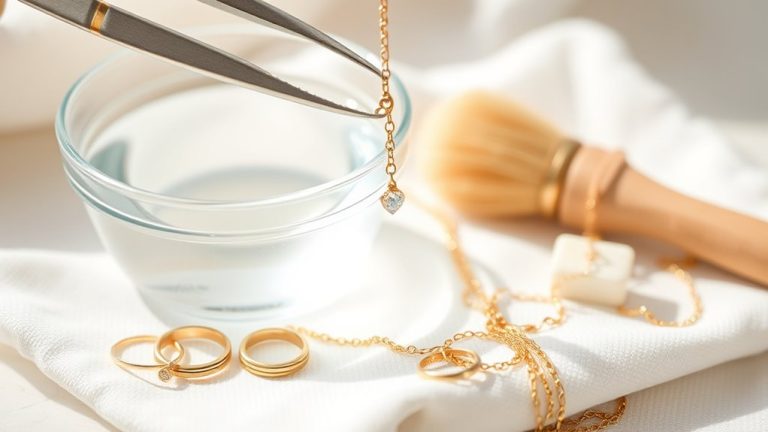
For a deeper clean, use mild soap with warm water, then dry thoroughly to prevent moisture buildup.
While cleaning is essential, remember to store your jewelry separately to avoid scratches and further tarnishing.
If your piece starts to lose its luster, consider professional replating to restore its original shine and extend its life.
Following these steps helps maintain your jewelry’s beauty longer.
Storage Best Practices
Since gold plated jewelry has a delicate layer that wears easily, you should store each piece separately in soft pouches or fabric-lined boxes to prevent scratches and friction.
Follow these storage best practices to slow oxidation and maintain protective coatings:
| Tip | Benefit |
|---|---|
| Use soft pouch | Prevent scratches |
| Store in dry, cool place | Reduce oxidation and tarnish |
| Add anti-tarnish strips | Control moisture |
| Avoid stacking pieces | Prevent metal-on-metal contact |
| Use quality storage containers | Preserve gold plating |
Keeping your jewelry away from humidity and air exposure extends its life.
Regularly clean it with a soft, dry cloth and reapply protective coatings or re-plate when you notice wear.
Proper storage containers and anti-tarnish elements are key to protecting your gold plated treasures.
Avoiding Chemical Exposure
When you expose your gold plated jewelry to chemicals like perfumes, lotions, or cleaning products, the delicate gold layer can tarnish and wear off much faster.
Minimizing chemical exposure is key to preventing tarnishing and preserving its shine.
To avoid damaging chemicals and reduce chemical contact, follow these tips:
- Apply beauty products before putting on your jewelry to limit chemical reactions.
- Remove jewelry before swimming in chlorinated pools to prevent accelerated wear off.
- Avoid wearing pieces while showering or cleaning to reduce contact with harsh chemicals.
- Wipe off sweat and body oils regularly to prevent erosion of the gold layer.
- Store jewelry separately to avoid unnecessary chemical exposure from other items.
Proper Cleaning Techniques for Gold Plated Jewelry
To keep your gold plated jewelry looking its best, you should clean it gently and regularly.
Use a soft cloth to wipe away oils and dirt after each wear. For deeper cleaning, dip a microfiber cloth in a mild soap solution with warm water, then lightly clean the surface.
Avoid harsh cleaners and abrasive materials that can damage the gold plating.
Don’t scrub or soak your jewelry. Proper jewelry cleaning helps with tarnishing prevention and extends its life.
| Step | Method | Tip |
|---|---|---|
| Wipe | Soft cloth after wear | Removes oils and dirt |
| Clean | Mild soap solution | Use warm water, no soaking |
| Avoid | Harsh cleaners | Prevents gold layer wear |
| Dry & Store | Pat dry, store properly | Reduces tarnishing risk |
Best Storage Practices to Prevent Damage
Although gold plated jewelry looks beautiful, it requires careful storage to maintain its shine and prevent damage.
To keep your pieces looking their best, you should store them properly to avoid scratches, tarnishing, and moisture exposure.
Here are the best storage practices to prevent damage:
- Store each piece separately in a soft pouch or a fabric-lined jewelry box to prevent scratches.
- Keep your jewelry in a cool, dry place, away from direct sunlight and humidity.
- Use anti-tarnish strips or silica gel packs inside your storage to absorb moisture.
- Avoid piling multiple items together to prevent friction and wear on the gold layer.
- Always place your gold plated jewelry in an airtight container when not in use to minimize exposure to air and prolong its appearance.
Signs Your Gold Plated Jewelry Needs Replating
If your gold plated jewelry starts showing visible wear like fading or discoloration, it’s a sign you may need to contemplate replating.
Watch for tarnishing that won’t come off with gentle cleaning, chipping or flaking of the gold layer, and uneven patches that diminish its shine.
These signs indicate wear and tear has exposed the base metal, compromising the jewelry’s look and longevity.
| Signs to Watch For | What It Indicates |
|---|---|
| Discoloration & Fading | Thinning gold layer |
| Exposed Base Metal | Replating needed immediately |
| Chipping & Uneven Patches | Gold plating wearing off |
Noticing these visible signs means it’s time to refresh your jewelry with professional replating to restore its beauty.
Comparing Gold Plated Jewelry to Solid Gold Options
How does gold plated jewelry stack up against solid gold options when it comes to durability and value?
While gold plated jewelry offers affordability, it usually lasts 1 to 3 years with regular wear before showing signs of wear and tear.
Solid gold, however, boasts superior durability and can last a lifetime without tarnishing.
Proper care can extend the lasting time of gold plated pieces, but they often need replating to maintain their look.
In contrast, solid gold requires minimal maintenance and retains intrinsic value.
- Gold plated jewelry has a thin gold layer prone to fading.
- Solid gold is made entirely of precious metal, enhancing durability.
- Gold plated pieces are affordable but have limited lasting time.
- Replating restores gold plated jewelry’s appearance.
- Solid gold jewelry holds and may appreciate in value over time.
Frequently Asked Questions
How Long Does Gold Plated Jewelry Last if Worn Every Day?
If you wear gold plated jewelry every day, it’ll usually last 1 to 2 years before fading.
To make it last longer, avoid water, chemicals, and friction.
Consider re-plating when the gold starts to wear off.
How to Keep Gold Plated Jewelry From Tarnishing?
You can keep gold plated jewelry from tarnishing by avoiding water, sweat, and chemicals.
It’s also a good idea to store it separately to prevent scratches.
Clean it gently with a soft cloth, and remember to remove it before applying lotions or perfumes.
This will help maintain its shine longer!
Is It Okay to Wear Gold Plated Jewelry All the Time?
Yes, you can wear gold plated jewelry all the time, but you should avoid moisture and chemicals.
Cleaning it regularly is a must.
Also, store it properly to keep the plating from wearing off quickly and maintain its shine.
What Are the Downsides of Gold Plated Jewelry?
Gold plated jewelry’s charm can fade like a sunset, revealing base metals that might irritate your skin.
It’s fragile and prone to chipping, requiring frequent care.
Conclusion
Your gold plated jewelry is like a delicate treasure—beautiful but needing care to shine.
By protecting it from harsh chemicals and cleaning it gently, you’ll extend its life and keep its glow alive.
Remember, every scratch or dull spot tells a story. With a little love, your pieces can keep sparkling longer than you might expect.
So, treat your jewelry well, and it’ll reward you with lasting beauty.
To ensure your gold plated jewelry lasts, avoid exposure to perfumes or lotions, and store it in a soft pouch or box.
Regularly clean it with a soft cloth to maintain its shine.
With proper care, your gold plated pieces will continue to dazzle and bring joy for years to come.
In conclusion, investing a bit of time and effort into caring for your gold plated jewelry will allow it to maintain its beauty and luster, making it a cherished part of your collection for a long time.