How Do You Get Rust Off Jewelry Step by Step
To get rust off your jewelry, start by making a baking soda paste with water.
Use a soft toothbrush to gently scrub the rusted areas in circular motions.
Let the paste sit for 15–30 minutes so it breaks down the rust.
Rinse the jewelry thoroughly with lukewarm water, then dry it carefully to prevent moisture buildup.
Finish by polishing with a soft cloth to restore shine.
Proper cleaning and storage help keep your pieces rust-free longer.
There’s more to learn about protecting your jewelry and maintaining its beauty.
Understanding Why Jewelry Rusts

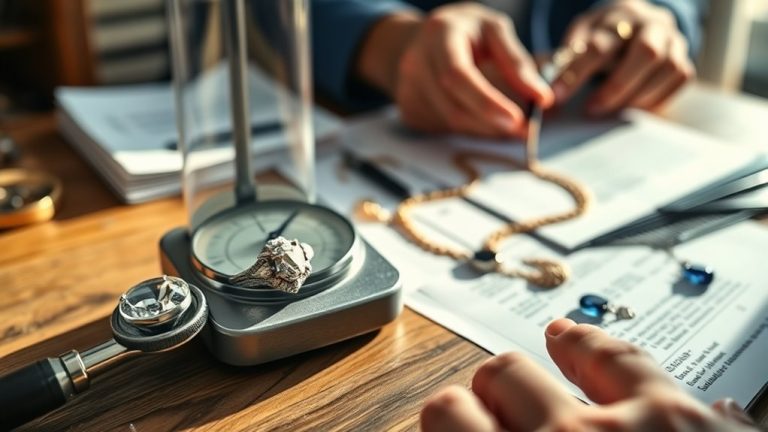
Although not all jewelry rusts, pieces containing iron or iron alloys do because iron reacts with moisture and oxygen to form rust.
This process, known as oxidation, creates iron oxide, which appears as that familiar reddish-brown flaky coating.
You’ll find that environmental factors like humidity, sweat, and pollution speed up rust formation on your jewelry.
Even plated pieces can rust if the protective layer wears off, exposing the iron underneath.
To protect your jewelry, you should focus on regular cleaning and proper storage.
Cleaning removes moisture, sweat, and corrosive elements that promote oxidation, while storing jewelry in a dry, sealed container minimizes exposure to air and humidity.
Understanding these factors helps you prevent rust and keep your jewelry looking its best.
Identifying Rust on Different Types of Jewelry

How can you tell if your jewelry is rusting?
Rust usually appears as reddish-brown flakes or spots and forms on iron-containing alloys like steel or brass due to oxidation.
If your jewelry is made from pure gold, silver, platinum, or titanium, it won’t rust because these metals lack iron.
However, silver can tarnish, developing a dark, almost black layer caused by silver sulfide from exposure to sulfur compounds.
Gold or silver-plated pieces may show rust or tarnish if the plating wears off, exposing the underlying metal.
Pay close attention to moisture, sweat, and humidity, as these accelerate rust formation.
Identifying the difference between rust and tarnish helps you choose the right cleaning method to restore your jewelry’s shine.
Gathering Materials and Tools Needed for Cleaning

Before you begin cleaning your jewelry, gather all necessary materials and tools to guarantee a smooth process.
Having everything ready helps you work efficiently and prevents delays.
Being prepared ensures a smooth cleaning process and saves you time.
Here’s what you’ll need:
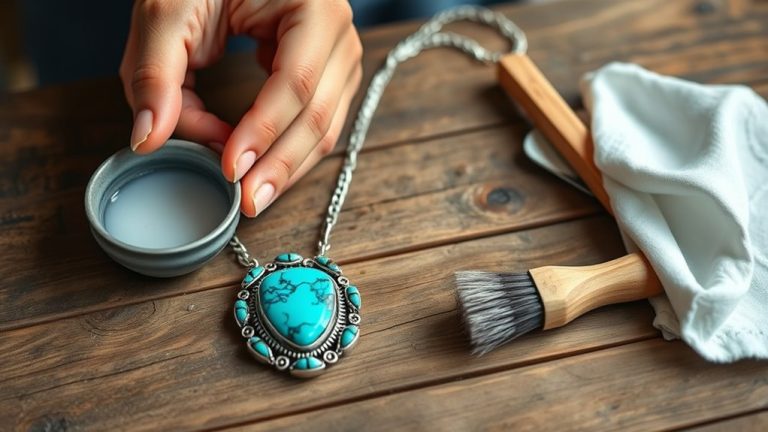
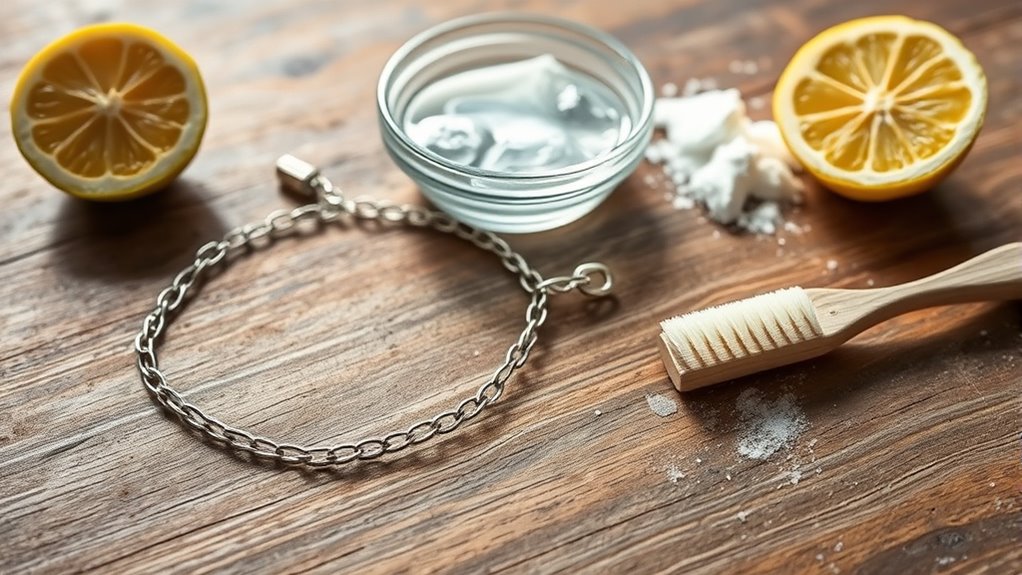
- Baking soda – a gentle abrasive for rust removal.
- Soft cloth – to dry and polish your jewelry without scratching.
- Soft-bristled toothbrush – for carefully scrubbing rust in hard-to-reach spots.
- A clean container or bowl – large enough to fully submerge your pieces for soaking.
Make sure all your cleaning tools are clean, dry, and free from abrasive materials.
This prevents further damage while you remove rust.
With these essentials, you’re set to tackle rust safely and effectively.
Preparing a Baking Soda Cleaning Solution
When you prepare your baking soda cleaning solution, aim for the right consistency based on how you plan to clean your jewelry—whether by gentle scrubbing or soaking.
For scrubbing, mix 2 tablespoons of baking soda with just enough water to form a thick paste.
Use a small bowl deep enough if you want to soak pieces; dissolve 1-2 tablespoons of baking soda in one cup of warm water for a soaking solution.
Adjust the water-to-baking soda ratio to suit your method.
Always prepare a fresh baking soda cleaning solution each time to ensure the best rust removal results.
Getting the mixture right helps you effectively tackle rust without damaging your jewelry.
Applying the Baking Soda Solution to Rusted Jewelry
Since you’ve prepared your baking soda solution, you can now apply it to your rusted jewelry.
This step is vital for effective rust removal and jewelry cleaning. Follow these simple actions:
- Dip a soft toothbrush into the baking soda paste, making sure it’s well coated.
- Gently scrub the rusted areas of your jewelry using circular motions to lift rust without damaging the metal.
- Let your jewelry sit for 15 to 30 minutes so the baking soda can break down the rust effectively.
- Rinse thoroughly with lukewarm water to remove all baking soda residue before drying.
Applying the baking soda solution carefully guarantees you restore your jewelry’s shine while tackling rust safely and efficiently.
Soaking Jewelry in a Vinegar Solution for Stubborn Rust
If the baking soda paste doesn’t completely remove the rust, soaking your jewelry in a vinegar solution can tackle more stubborn spots.
Mix one part white vinegar with two parts water and soak your jewelry for 15-30 minutes.
The acetic acid in vinegar reacts with rust, breaking down the iron oxide without harming most metals.
For heavily rusted pieces, you can gently scrub with a soft toothbrush during or after soaking to loosen rust particles further.
This method effectively dissolves rust buildup that resists other treatments.
Just remember, after soaking, rinse your jewelry thoroughly to remove any residual vinegar and prevent further corrosion.
This vinegar soak will help restore your jewelry’s shine by targeting deeper rust layers safely and efficiently.
Rinsing and Thoroughly Drying Jewelry After Cleaning
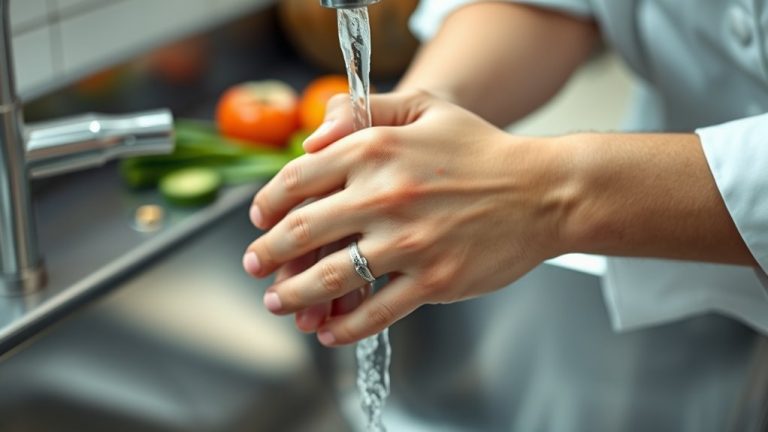
After cleaning your jewelry, you’ll want to rinse it thoroughly with lukewarm water to wash away any leftover cleaning agents and loosened rust particles.
Proper rinsing guarantees no residue remains that could cause damage.
Then, focus on drying your jewelry carefully to prevent moisture buildup.
Follow these steps for effective rinsing and drying:
- Rinse jewelry under lukewarm water immediately after cleaning.
- Use a soft brush or cotton swab dipped in clean water for intricate areas.
- Gently pat dry with a soft, lint-free cloth to remove all moisture.
- Avoid air drying in humid places; always dry completely before storing.
Polishing Jewelry to Restore Shine and Finish
While rinsing and drying removes rust and residue, polishing your jewelry brings back its original shine and finish.
Start polishing by using a soft, lint-free jewelry polishing cloth.
Begin polishing with a soft, lint-free jewelry cloth to gently restore shine and prevent scratches.
Apply a small amount of jewelry cleaner or metal polish to the cloth, following the product instructions.
Gently rub your piece in circular motions to evenly distribute the polish and avoid scratches.
For intricate designs, dip a soft toothbrush in polish to reach those hard-to-get crevices, then buff with your cloth.
After polishing, rinse the jewelry with lukewarm water if necessary, then dry thoroughly with a clean, soft cloth to prevent water spots or residue buildup. This careful polishing process helps restore shine and keeps your jewelry looking its best.
Avoiding Damage to Gemstones and Delicate Pieces
Polishing your jewelry restores its shine, but you need to be careful around gemstones and delicate settings to avoid damage.
When removing rust from delicate jewelry, proper cleaning and care are essential to protect fragile stones and settings.
Follow these steps:
- Use a soft or jewelry polishing cloth to gently clean around gemstones, avoiding harsh abrasives.
- Soak jewelry in a mild dish soap and water solution safe for gemstones; avoid strong chemicals.
- Never use steel wool or rough brushes on delicate pieces—they can scratch or loosen stones.
- Test cleaning methods on a hidden area first, then dry thoroughly with a lint-free cloth to prevent moisture buildup.
These precautions help you remove rust effectively without harming your precious jewelry.
Tips for Preventing Rust in the Future
To keep rust from forming, store your jewelry in a cool, dry place.
Consider adding silica gel packs to absorb moisture.
Make it a habit to clean your pieces regularly with a soft cloth to remove sweat and oils.
This simple routine helps you catch rust early and keeps your jewelry looking its best.
Proper Jewelry Storage
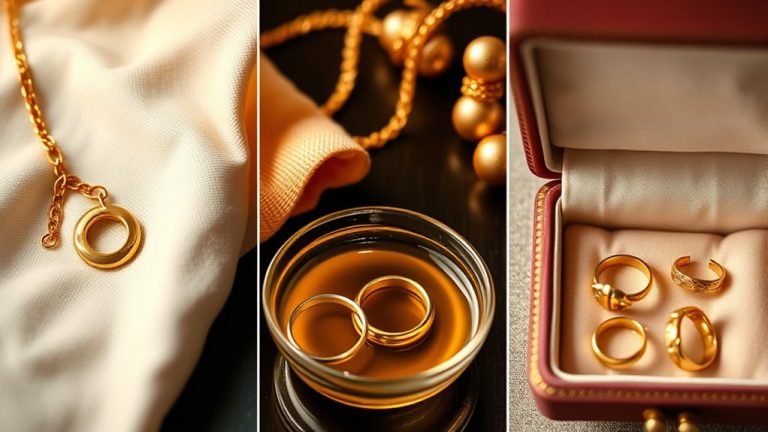
Since moisture is the main culprit behind rust, you’ll want to store your jewelry in a cool, dry place like a jewelry box with silica gel packets.
Proper jewelry storage helps prevent rust and keeps your pieces looking their best after you remove rust or finish cleaning jewelry.
Follow these tips:
- Use soft pouches or separate compartments to avoid scratches and moisture transfer between pieces.
- Avoid plastic bags or airtight containers that trap moisture and promote rust.
- Wipe jewelry with a soft, dry cloth after wearing to remove sweat, oils, and dirt.
- Regularly inspect and clean your storage area to keep it dry and dust-free.
Taking these small steps can really make a difference!
Regular Cleaning Routine
Although rust can be stubborn, maintaining a regular cleaning routine can keep your jewelry looking pristine and prevent future damage.
To clean your jewelry effectively, use a soft cloth to gently remove sweat, dirt, and oils that accelerate rust and tarnish.
Avoid wearing your jewelry during activities that expose it to water, sweat, or chemicals, like swimming or cleaning, to minimize risks.
Store your pieces in a cool, dry place and consider adding silica gel packs to absorb moisture.
Regularly inspect your jewelry for any signs of rust or tarnish, and address them promptly.
Frequently Asked Questions
What Removes Rust From Jewelry?
You can remove rust from jewelry using baking soda paste, white vinegar soak, or lemon juice with salt.
Gently scrub with a soft toothbrush, or use aluminum foil with baking soda to restore shine without damage.
Does Dawn Dish Soap Remove Rust?
Dawn dish soap doesn’t remove rust effectively on its own.
You can use it to loosen grime and combine it with baking soda or vinegar for better results.
But specialized rust removers work best for stubborn rust spots.
What Removes Rust Immediately?
You know what they say, “Strike while the iron is hot.”
You can remove rust immediately using commercial rust removers or an aluminum foil, baking soda, and hot water combo, which quickly lifts rust through oxidation.
What Is the Best Homemade Jewelry Cleaner?
The best homemade jewelry cleaner combines baking soda, white vinegar, and warm water.
You’ll create a fizzing reaction that lifts tarnish and rust gently.
After soaking, rinse and polish your jewelry with a soft cloth for shine.
Conclusion
Now that you know how to get rust off your jewelry, you’re ready to bring back its sparkle!
Did you know that over 60% of people unknowingly damage their jewelry by using harsh cleaners?
By following these simple steps, you’ll safely remove rust without harming delicate stones or finishes.
Remember, regular cleaning and proper storage can prevent rust from coming back.
Keeping your favorite pieces looking their best for years to come is totally achievable!
In conclusion, by being mindful of how you clean and store your jewelry, you can avoid damaging it.
Regular maintenance and gentle cleaning methods are key to preserving its beauty and preventing rust.
So, keep your jewelry sparkling and rust-free with these easy tips!