Does Toothpaste Clean Jewelry and How to Clean Jewelry With Toothpaste
You can clean some jewelry with plain, non-gel toothpaste by gently applying it with a soft cloth or brush and rinsing thoroughly.
However, toothpaste contains abrasives that may scratch softer metals and gemstones or leave residue in crevices, dulling your pieces over time.
It’s best to test first on a small area and avoid frequent use.
If you want safer methods or detailed steps, keep exploring for tips to protect your jewelry’s shine and integrity.
Understanding the Effects of Toothpaste on Jewelry

Although toothpaste might seem like a convenient option, you should be cautious when using it on your jewelry.
Toothpaste contains microscopic abrasives like silica that are great for cleaning your teeth but can cause damage to softer metals such as gold, silver, and platinum.
Microscopic abrasives in toothpaste can scratch and damage softer metals like gold, silver, and platinum.
These abrasives can scratch delicate gemstones and metal settings, dulling their shine over time.
Additionally, toothpaste residue can get trapped in intricate jewelry designs, making thorough cleaning difficult and potentially leading to buildup.
Toothpaste also falls short when it comes to removing deep tarnish, grease, or oils compared to specialized cleaning products.
Selecting the Appropriate Toothpaste for Cleaning

When choosing toothpaste for cleaning your jewelry, you want to pick a plain, white, non-gel formula without whitening agents or tartar control.
These additives can be abrasive or contain harsh chemicals that might damage delicate jewelry.
Avoid toothpaste with high baking soda content, as it can be too abrasive for some metals and stones.
Always check ingredient labels and test the toothpaste on a small, hidden area first to guarantee it won’t harm your piece.
| Toothpaste Type | Abrasiveness Level | Suitable for Jewelry |
|---|---|---|
| Plain White | Low | Safe for most metals |
| Whitening | High | Avoid due to harsh agents |
| Gel | Moderate | Less effective, avoid |
This careful selection ensures your cleaning methods protect your jewelry’s shine without damage.
Preparing Jewelry for Toothpaste Cleaning

Once you’ve picked the right toothpaste, get your jewelry ready for cleaning by removing it and checking for any loose stones or damage.
Before applying toothpaste, inspect each piece carefully to avoid worsening existing damage.
Next, rinse your jewelry with clean water to remove dirt or grease. This ensures a smooth cleaning process.
Slightly dampen the jewelry again with water so the toothpaste will adhere evenly during cleaning.
To prevent damage, test the toothpaste on a small, hidden spot first.
This preparation helps protect your jewelry while maximizing the cleaning effect.
Step-By-Step Guide to Cleaning Jewelry With Toothpaste
You’ll want to choose a plain, white toothpaste without added gels or whitening agents to avoid damage.
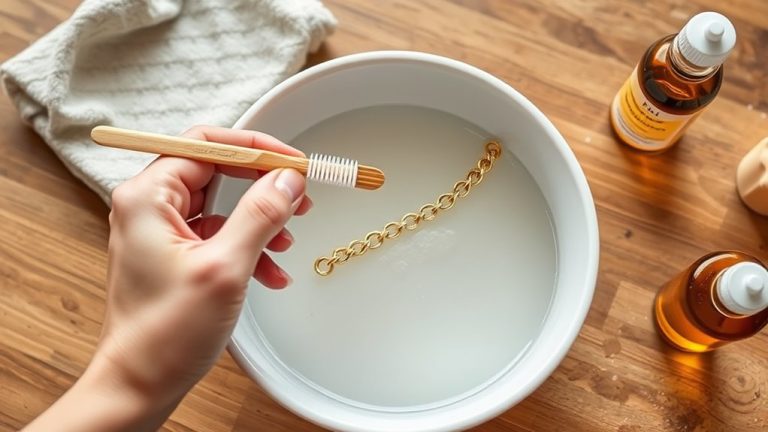
Apply it carefully with a soft cloth or toothbrush, focusing on tarnished spots while steering clear of delicate stones.
After scrubbing, rinse thoroughly and polish with a lint-free cloth to bring back the jewelry’s shine.
Toothpaste Selection Tips
Although many toothpaste varieties exist, choosing the right one is essential for safely cleaning your jewelry.
Using the proper toothpaste helps protect your precious pieces and ensures an effective cleaning solution, especially for regular maintenance.
Follow these toothpaste selection tips:
- Pick plain, white, non-gel toothpaste without whitening agents or abrasives to avoid damage.
- Avoid gel or colored toothpaste, as they may stain or scratch delicate surfaces.
- For enhanced cleaning, mix 3 parts bicarbonate of soda with 1 part water to create a gentle paste.
- Always rinse thoroughly to remove all toothpaste residue, preventing buildup in intricate settings.
Selecting the right toothpaste sets the foundation for safely restoring your jewelry’s shine without harming its finish.
Application Techniques Explained
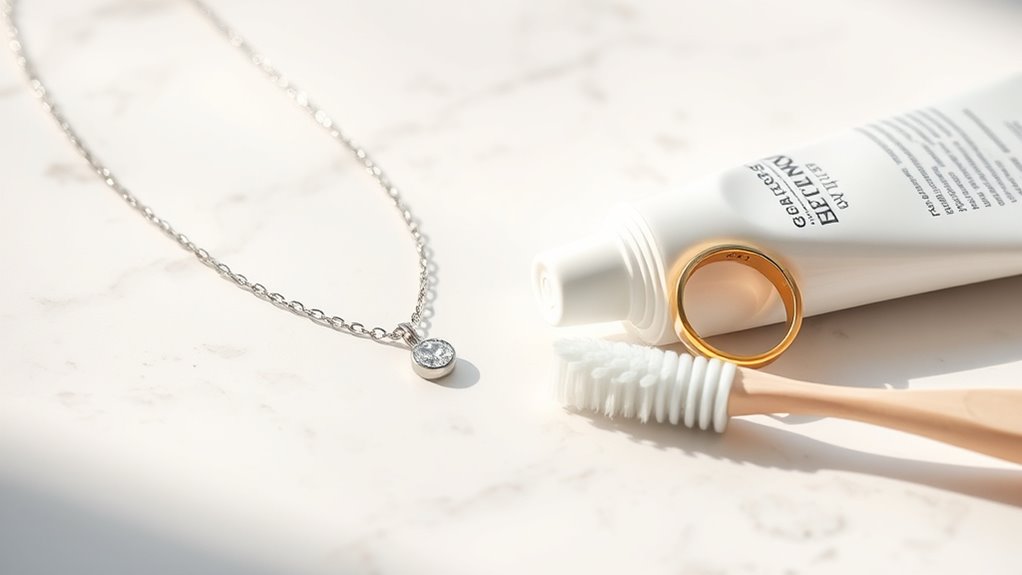
When cleaning your jewelry with toothpaste, start by applying a small amount of plain, non-gel toothpaste to a soft cloth or toothbrush.
Target the tarnished or dull areas carefully.
Use gentle, circular motions to scrub these tarnished areas, but be sure to avoid delicate stones like pearls or opals.
After scrubbing, wipe away the toothpaste residue thoroughly with a damp cloth or cotton swab.
This step is vital to avoid residue buildup before you proceed to rinsing.
| Step | Action |
|---|---|
| Apply toothpaste | Use small amount on cloth/brush |
| Scrub | Circular motions on tarnished areas |
| Wipe residue | Damp cloth or cotton swab |
These application techniques ensure effective cleaning and prepare your jewelry for thorough rinsing.
Rinsing and Polishing
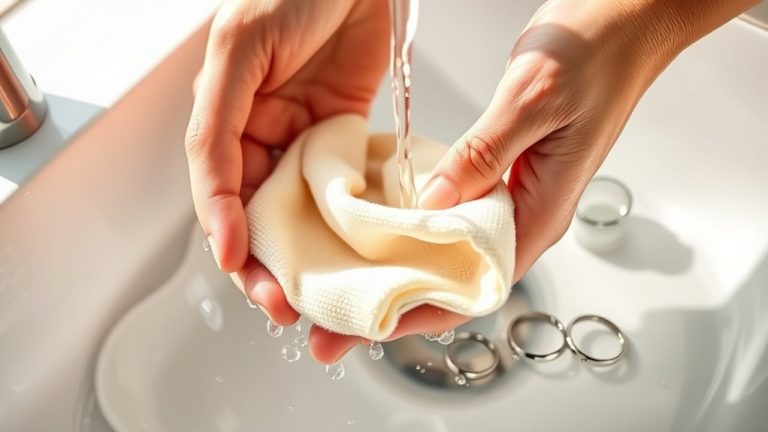
After wiping away the toothpaste residue, the next step involves rinsing your jewelry thoroughly with lukewarm water to remove any remaining paste.
Be sure to rinse thoroughly, especially around intricate settings, to prevent trapping debris.
Then, follow these steps:
- Inspect your jewelry carefully for leftover paste or tarnish.
- Pat it dry gently with a soft, lint-free cloth, avoiding harsh rubbing.
- Use a polishing cloth to buff and restore shine, enhancing brightness without scratching.
- Regularly clean and maintain your jewelry this way to keep it looking its best.
Rinsing and Drying Techniques for Best Results
To achieve the best results, you’ll want to rinse your jewelry thoroughly with lukewarm water. This helps wash away any toothpaste residue without risking damage from heat.
Proper rinsing is vital to remove residual abrasives that can scratch your pieces if left behind.
Always rinse thoroughly to eliminate abrasives that might scratch your jewelry surfaces.
After rinsing, focus on drying your jewelry carefully. Use a soft, lint-free cloth to gently pat it dry—avoid rubbing, which might cause scratches.
Complete drying is essential to prevent water spots and tarnish buildup, especially on silver or delicate metals.
Be sure to inspect your jewelry closely once it’s dry to spot any leftover residue before moving on to further polishing.
Following these rinsing and drying techniques ensures your jewelry cleaning process is both safe and effective.
Evaluating the Effectiveness of Toothpaste Cleaning
You might notice toothpaste can brighten your jewelry at first, but its cleaning power often falls short on deep grime.
Be careful—abrasives in toothpaste can scratch softer metals and leave tiny residues in detailed settings.
Over time, this can dull your jewelry’s shine instead of preserving it.
Cleaning Power Assessment
How well does toothpaste really clean your jewelry?
Toothpaste contains mild abrasives that target surface tarnish and dirt, but its cleaning power has clear limits.
Here’s what you should know:
- Toothpaste abrasives effectively remove light, surface-level grime and tarnish.
- It struggles to eliminate deep-seated tarnish or embedded grease in intricate settings.
- Professional cleaning methods, like ultrasonic and steam cleaning, provide far superior results.
- Using toothpaste frequently can dull your jewelry over time instead of preserving its shine.
While toothpaste can temporarily brighten your pieces, it’s not a substitute for professional cleaning.
To maintain your jewelry’s brilliance, rely on specialized services rather than toothpaste’s limited abrasives.
Abrasive Effects Risk
While toothpaste can remove light grime, its abrasive ingredients pose significant risks to your jewelry’s surface.
Toothpaste contains tiny abrasives like silica, which can cause surface scratches, especially on delicate metals such as gold, silver, and platinum.
These abrasive effects are meant for enamel, not fine jewelry, increasing the chance of irreversible damage.
If you use toothpaste regularly, cumulative damage may dull your pieces and weaken metal components over time.
Because toothpaste isn’t designed for jewelry cleaning, the risks often outweigh any temporary shine it might provide.
To protect your jewelry, it’s best to avoid toothpaste and opt for methods that won’t compromise the integrity of delicate metals or cause lasting surface scratches.
Residue and Shine
Although toothpaste can temporarily boost the shine of silver jewelry thanks to its mild abrasives, it often leaves behind residue that gets trapped in intricate settings.
This buildup can dull the sparkle over time, negating the initial shine improvement.
When evaluating toothpaste for cleaning, keep in mind:
- Toothpaste’s abrasive particles can cause micro-scratches, leading to permanent damage on softer metals and gemstones.
- Residue left in crevices is tough to rinse out fully, creating a cloudy look.
- While it removes light tarnish, toothpaste won’t tackle deep grime or grease effectively.
- Regular use increases residue accumulation, diminishing overall brilliance.
Safer Alternatives for Jewelry Cleaning at Home
Since toothpaste can be abrasive and potentially damage your jewelry, you’ll want to choose safer cleaning methods that protect your pieces.
Start with warm water and mild dish soap, which gently lifts dirt without harming delicate metals or stones. You should avoid using toothpaste altogether to prevent scratches.
For a more targeted approach, consider jewelry-specific cleaning solutions designed for gold, silver, and gemstones; these are formulated to clean effectively while preserving the material’s integrity.
Polishing with a soft cloth also restores shine without risk. While some use ultrasonic cleaners, they’re best reserved for sturdy items, as they can damage soft stones.
Regular home cleaning and inspection help maintain your jewelry’s brilliance and reduce the need for professional cleaning services. This way, you can keep your collection safe and sparkling longer!
When to Seek Professional Jewelry Cleaning Services
If your home cleaning efforts don’t remove all the grime or you notice intricate details and delicate stones in your jewelry, it’s a good idea to turn to professional cleaning services.
Professionals use specialized equipment that safely cleans without damaging your pieces.
You should seek professional cleaning when:
- Your jewelry has intricate designs or delicate gemstones requiring proper care.
- You have valuable jewelry, especially vintage or fragile items.
- There’s stubborn tarnish or residue that won’t come off with home methods.
- You want an expert to inspect for hidden issues like loose prongs.
Choosing professional cleaning preserves your jewelry’s integrity and extends its lifespan.
This way, you can ensure your treasured pieces remain beautiful and secure.
Frequently Asked Questions
Can I Use Toothpaste to Clean My Jewelry?
You shouldn’t use toothpaste to clean your jewelry because it can scratch metals and damage stones.
Instead, choose gentle, specialized cleaners or mild soap with a soft brush to keep your pieces sparkling and safe.
What Is the Best Homemade Solution to Clean Jewelry?
For fabulous, freshened finds, fix a floury formula: mix baking soda with water, then softly scrub your sparkling stones.
Soak first with soap, scrub gently, rinse well, and relish your radiant, refreshed jewelry’s shine!
What Is the Best Toothpaste for Cleaning Silver Necklaces?
You should use a plain, white, non-gel toothpaste without whitening or tartar control ingredients to clean silver necklaces.
Avoid harsh abrasives, and apply gently with a soft cloth or brush.
Always test first on a small area.
Conclusion
While toothpaste can brighten some jewelry, it’s not a one-size-fits-all solution.
What cleans silver might harm delicate gemstones. You might find it handy for quick fixes, but it’s no substitute for gentle, purpose-made cleaners or professional care.
Balancing convenience with caution is essential. This ensures your jewelry stays beautiful without unintended damage.
So, before you scrub, weigh the risks and benefits carefully.
Toothpaste can be a quick option for cleaning jewelry, but be cautious. Always consider the materials and potential risks involved. For the best results and to maintain the integrity of your pieces, professional cleaning is often the safest route.
Remember, keeping your treasures sparkling safely is the goal! So think twice before using toothpaste and opt for specialized products when possible.