How to Bring Your Own Jewelry When You Get Pierced
If you’re considering bringing your own jewelry when getting pierced, it’s essential to be well-informed. Many piercing studios have specific policies regarding personal jewelry, so it’s a good idea to check with them first.
They often require approval and typically only allow high-quality metals like titanium, surgical steel, or gold for safety reasons.
Make sure your jewelry is properly sized, clean, and sterilizable to avoid infections or allergic reactions.
And don’t forget to inform your piercer about any metal allergies you may have.
Studios usually prefer to provide jewelry themselves, especially for new piercings.
However, personal pieces may be acceptable after your piercing has healed.
By preparing and communicating clearly, you can ensure a safe and enjoyable experience.
Understanding Studio Policies on Personal Jewelry

Before bringing your own jewelry to a piercing studio, it’s really important to verify their policies.
Most studios require prior approval and often prohibit outside jewelry for initial piercings. This helps ensure safety and proper sterilization.
Studios typically require approval and forbid outside jewelry initially to ensure safety and sterilization.
Every studio has its own rules, so it’s vital to reach out ahead of time to understand their stance on outside jewelry.
Many studios only accept jewelry purchased on-site. This guarantees quality, correct sizing, and sterilization standards that protect your health.
If you show up with outside jewelry without approval, you might face delays or even rejection. You could also be asked to buy jewelry at the studio instead.
Following studio policies helps ensure your initial piercing heals properly. It also helps avoid complications related to material compatibility or hygiene.
Always check before you bring your own jewelry to avoid any surprises!
Materials Suitable for Initial Piercings

When choosing jewelry for your initial piercing, it’s essential to pick safe, high-quality materials like titanium, surgical steel, or 14k and 18k gold.
You’ll want hypoallergenic metals to minimize irritation and allergic reactions, especially if you have sensitive skin.
Avoid anything with glued stones or made from plastic or wood, as these don’t sterilize well and can cause complications.
Safe Jewelry Materials
Although choosing your own jewelry can be exciting, you need to guarantee it’s made from safe materials suitable for initial piercings.
Using safe jewelry materials is vital to avoid irritation and infection.
Look for pieces that are:
- Made from high-quality, hypoallergenic metals like implant-grade titanium, 14k or 18k gold, or surgical stainless steel.
- Smooth and free of scratches or dents to prevent tissue irritation and bacterial buildup.
- Able to withstand proper sterilization methods like autoclaving—avoid plastics or wood.
- Equipped with securely set, certified gemstones that won’t degrade during sterilization.
Choosing jewelry with these features supports healing and reduces allergic reactions.
Always prioritize materials that meet these safety standards before bringing your own jewelry for a fresh piercing.
Hypoallergenic Metal Options
Since your skin is most vulnerable after a fresh piercing, choosing hypoallergenic metals like surgical-grade stainless steel, titanium, or 14k and 18k gold can help prevent irritation and allergic reactions.
Titanium stands out as the safest choice because it’s highly biocompatible and rarely causes irritation.
Surgical-grade stainless steel is another reliable option, but make sure it’s free from nickel to avoid allergic responses.
If you prefer gold, stick to 14k or 18k to ensure it’s pure enough and free from harmful alloys.
Always choose jewelry with a smooth, flawless surface to minimize bacterial buildup and promote healing.
Avoid low-quality metals or anything containing nickel, as these often cause complications during the healing process.
Selecting the right hypoallergenic metals safeguards your piercing and keeps you comfortable.
How to Confirm Jewelry Quality and Authenticity

To confirm your jewelry’s quality and authenticity, start by verifying it’s made from high-grade, implant-safe materials like titanium or 14k and 18k gold certified by the manufacturer.
Next, check for proper labeling or documentation that verifies the material type and purity. Always ask for a receipt or proof of purchase.
Inspect the jewelry closely—it should be free from scratches or dents that could harbor bacteria and hinder proper sterilization.
Also, make sure the jewelry is the right size, with the correct gauge and length for your piercing as recommended by your piercer.
Remember to avoid pieces with glued stones, plastic, or wood since these can’t withstand sterilization and may cause infections.
Quality jewelry ensures a safer, cleaner piercing experience.
Preparing Your Jewelry for Sterilization
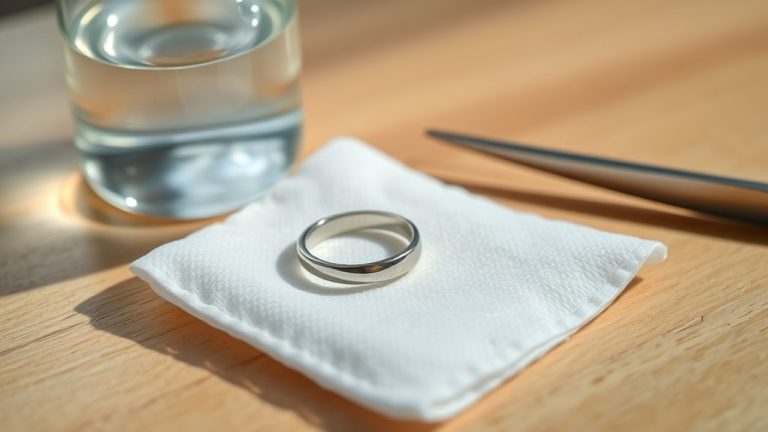
Before your piercing appointment, you’ll want to make certain your jewelry is properly prepared for sterilization by cleaning it thoroughly and confirming it’s made from materials like surgical steel, titanium, or high-quality gold that can withstand autoclaving.
Start with a careful cleaning using an appropriate disinfectant to remove oils, dirt, and bacteria.
Avoid any jewelry with adhesives, stones, or decorations that could be damaged or disintegrate during sterilization.
Double-check that your jewelry’s size, gauge, and length align with the piercing studio’s requirements to ensure safe healing.
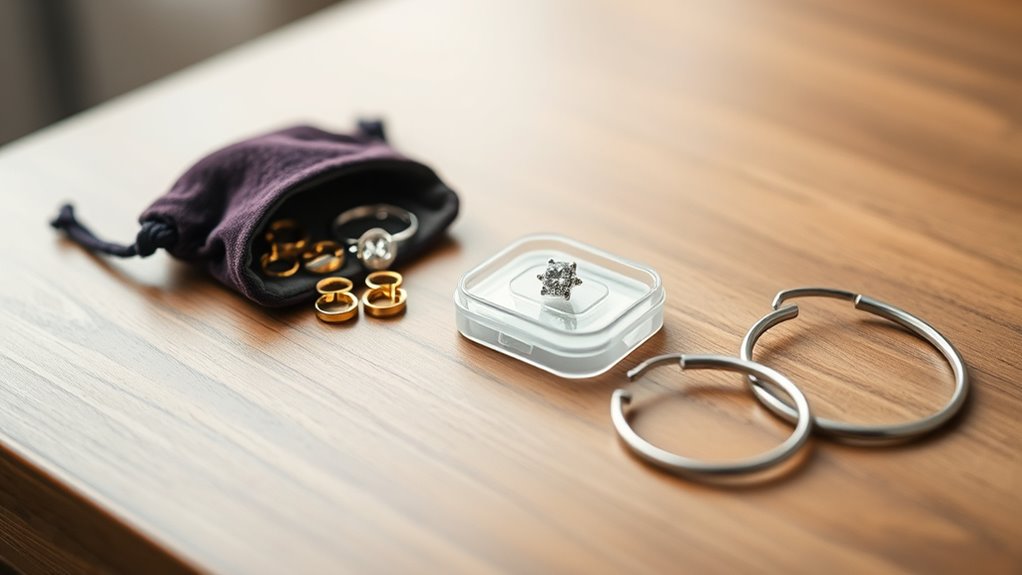
Once cleaned, store your high-quality jewelry in a clean, sealed container to prevent contamination before your appointment.
Proper preparation guarantees your jewelry is ready for effective sterilization and a smooth piercing experience.
Communicating Metal Allergies to Your Piercer
If you have metal allergies, it’s really important to let your piercer know right away.
Always inform your piercer immediately if you have metal allergies to ensure safe jewelry choices.
This way, they can choose hypoallergenic jewelry that won’t trigger a reaction.
Don’t hesitate to discuss your sensitivities with them to avoid complications during the healing process.
If you’re bringing your own jewelry, here are some tips to make sure it’s safe:
- Always confirm that the materials used are titanium, surgical steel, or 14k/18k gold.
- Check for certifications that indicate surgical- or implant-grade quality.
- Avoid plated or alloy jewelry, as they may contain nickel or other allergens.
- And definitely, be clear about your metal allergies to ensure they make the right choices for you.
Choosing the Right Size and Style for Healing
You’ll want to pick jewelry with the right gauge and length to allow for swelling and healing.
Choosing styles like straight barbells or smooth hoops diminishes pressure and irritation.
Matching the jewelry type to your piercing location also helps make certain of a smoother recovery.
Proper Gauge and Length
When selecting jewelry for a new piercing, choosing the proper gauge and length plays a crucial role in ensuring smooth healing.
For initial piercings, the gauge usually ranges from 16 to 14 to accommodate swelling and avoid irritation.
The length should be slightly longer than the piercing channel by about 2-3 millimeters, allowing room for swelling without causing pressure.
Before your jewelry change, ensure your jewelry to be pierced meets these criteria to prevent embedding or migration.
Keep these points in mind:
- Select smooth, rounded jewelry to minimize trauma.
- Choose a gauge recommended by your piercer.
- Opt for a length that fits comfortably, allowing swelling.
- Verify compatibility with your piercing location for healing.
Proper sizing safeguards your healing process and comfort.
Suitable Jewelry Styles
Choosing the right jewelry style goes hand in hand with selecting the proper gauge and length for your piercing.
When you bring initial jewelry to a piercing, opt for smooth, simple designs like straight barbells, captive bead rings, or seamless hoops.
These styles minimize irritation and make cleaning easier, which is essential for healing.
Avoid jewelry with rough edges, textures, or decorative elements that can cause discomfort or delay recovery.
Always choose high-quality, hypoallergenic materials such as titanium or 14K gold to prevent allergic reactions.
Proper sizing and style help reduce risks like migration, rejection, or embedding, ensuring a smoother healing process.
Bringing the right initial jewelry to a piercing sets you up for a better, more comfortable experience from day one.
Risks of Using Non-Professional Jewelry
Although bringing your own jewelry might seem convenient, using non-professional pieces can substantially increase your risk of infection and allergic reactions during the healing process.
Non-professional jewelry often lacks proper material safety, which raises the infection risk and may trigger allergic responses.
Using non-professional jewelry increases infection risk and can cause allergic reactions due to unsafe materials.
Jewelry not designed for piercings can harbor bacteria or fail sterilization, leading to complications.
Consider these risks:
- Costume jewelry with glued stones can degrade or release toxins during sterilization.
- Low-quality metals may cause swelling, irritation, or delayed healing.
- Improper sizing can cause injury or improper piercing placement.
- Unsterilized pieces introduce harmful bacteria that increase infection risk.
To protect your health, always prioritize professional-grade jewelry that meets safety standards during the critical healing phase.
When Personal Jewelry Is Allowed for Healed Piercings
Since your piercing has fully healed, you can usually bring your own jewelry for changes or upgrades.
But, it’s important to ensure that it meets specific quality and safety standards.
Piercing studios typically accept personal jewelry made from titanium, gold, or surgical steel.
Just make sure it’s properly sterilized and fits the piercing site.
Always check your studio’s policy beforehand.
They may require proof of purchase or material certification to guarantee safety.
Remember, outside jewelry isn’t allowed for new piercings, only healed ones.
| Condition | Allowed? |
|---|---|
| Fully healed | Yes |
| Initial piercing | No |
| High-quality metal | Yes |
| Unsterilized jewelry | No |
| Proof of purchase | Often required |
Bringing your own jewelry ensures a safer, personalized experience at your piercing studio.
Best Practices for Aftercare With Your Own Jewelry
When you bring your own jewelry, maintaining proper aftercare becomes essential to prevent irritation and infection.
To ensure your piercing heals well with the jewelry you choose, keep these best practices in mind:
Keep these essential tips in mind to promote proper healing with your chosen piercing jewelry.
– Clean your piercing site and jewelry twice daily using a gentle, piercing-specific cleanser.
Avoid household soaps, alcohol, or peroxide.
– Confirm your piercing jewelry is made of high-quality, hypoallergenic materials like titanium or 14K gold.
This helps minimize allergic reactions.
– Always handle your jewelry with clean hands.
And use sterilized tools or gloves when adjusting it.
– Follow your piercer’s instructions carefully, especially regarding cleaning frequency.
And don’t remove or change your jewelry prematurely.
Tips for Coordinating With Your Piercer Before Your Appointment
Before your appointment, reach out to the piercing studio to confirm their policy on bringing your own jewelry.
Rules can vary widely, so it’s good to ask early.
Contacting the piercing shop ahead of time lets you schedule a consultation to discuss if your jewelry meets safety standards.
Make sure your jewelry is sterilized and made of hypoallergenic materials like titanium or 14k gold.
Also, verify size, gauge, and style compatibility to avoid any issues.
| Step | Action |
|---|---|
| Contact piercing shop | Confirm jewelry policy |
| Provide details | Share material and origin info |
| Schedule consultation | Discuss jewelry compatibility |
| Bring sterilized item | Ensure jewelry is pre-sterilized |
Coordinating ahead keeps your piercing safe and smooth.
Frequently Asked Questions
Can I Bring My Own Jewelry for a Piercing?
Yes, you can bring your own jewelry if it’s high-quality, properly sized, and sterilized.
Just check the studio’s policy first.
Also, make sure to inform your piercer about any allergies or sensitivities to avoid complications.
What Is the 3/2 Rule for Piercings?
Think of the 3/2 rule like fitting shoes—you need jewelry at least three times the gauge and twice the swelling’s length.
This guarantees your piercing heals well without pressure.
It also helps prevent tearing or migration during swelling.
What Hurts Less, a Needle or a Gun?
A needle hurts less than a gun.
You’ll experience less tissue damage and pain since the needle creates a clean, precise puncture.
Guns cause more trauma and swelling, so choosing a needle means a safer, gentler piercing.
What Is the 2 3 Earing Rule?
You want space, you want healing, you want safety—that’s the 2-3 Earring Rule:
keep piercings 2 to 3 millimeters apart to avoid damage,
reduce swelling, and guarantee your new jewelry heals perfectly without problems.
Conclusion
Bringing your own jewelry to a piercing appointment can save you money and guarantee you get exactly what you want.
But did you know that 70% of studios won’t accept personal jewelry for initial piercings due to safety concerns?
To avoid surprises, always check studio policies and communicate allergies ahead of time.
Preparing and sterilizing your jewelry properly is key.
When done right, using your own jewelry can make your piercing experience smoother and more personalized.
In conclusion, while it can be tempting to bring your own jewelry, it’s crucial to understand the studio’s policies.
Always prioritize safety by ensuring your jewelry is properly sterilized.
By doing so, you can enjoy a more tailored piercing experience that meets your expectations!