How Muslims Wear Jewelry: Guidelines and Tips
You can wear jewelry in Islam by choosing modest, simple pieces that reflect humility and faith.
Women may wear gold and silver, especially at home or during special occasions, while covering these items around non-mahram men.
Men should avoid gold and flashy items, opting for modest rings instead.
Always treat religious symbols with respect, keeping them clean and dignified.
Following these guidelines helps you honor your beliefs and style.
Explore further to discover detailed tips and meaningful ways to wear Islamic jewelry.
Islamic Principles for Wearing Jewelry

Although Islamic principles allow women to wear gold and silk jewelry, men are generally prohibited from wearing gold.
As a woman, you can choose to adorn yourself with gold pieces, but you should always pair them with modest dress to reflect humility and faith.
Jewelry isn’t meant to be flashy or ostentatious; instead, it should complement your modest style without drawing excessive attention.
Jewelry should enhance modesty, not attract undue attention or appear extravagant.
When selecting jewelry, opt for simple designs and avoid pure gold or silver, as these are discouraged.
Gold-plated or sterling silver items with low gold content are better choices.
By following these guidelines, you’ll honor Islamic teachings while expressing your personal taste through your jewelry and modest dress.
This approach balances beauty with respect for religious values.
Respecting Religious Symbols in Jewelry

When you wear jewelry featuring religious symbols, such as rings inscribed with Allah or Prophet Muhammad’s names, you should treat them with the utmost respect and care.
These pieces aren’t just accessories; they carry deep meaning and serve as constant reminders of your faith.
Practice respectful handling by keeping them clean and avoiding unclean places like toilets, which helps preserve their sanctity.
Remember, religious symbols in jewelry hold spiritual significance, so handle them modestly and avoid ostentation.
Mishandling or disrespecting these items can diminish their value and your connection to your beliefs.
Jewelry Guidelines for Muslim Women

While Muslim women can wear jewelry like gold and silver, especially during special occasions or at home, they should cover it when around non-mahram men to maintain modesty.
When you wear jewelry, focus on simple and elegant designs that reflect your faith and humility without flaunting wealth.
Gold jewelry is popular, but keep it modest and avoid excessive displays.
If your pieces have religious symbols or Quranic verses, treat them with respect—keep them clean and away from unclean places.
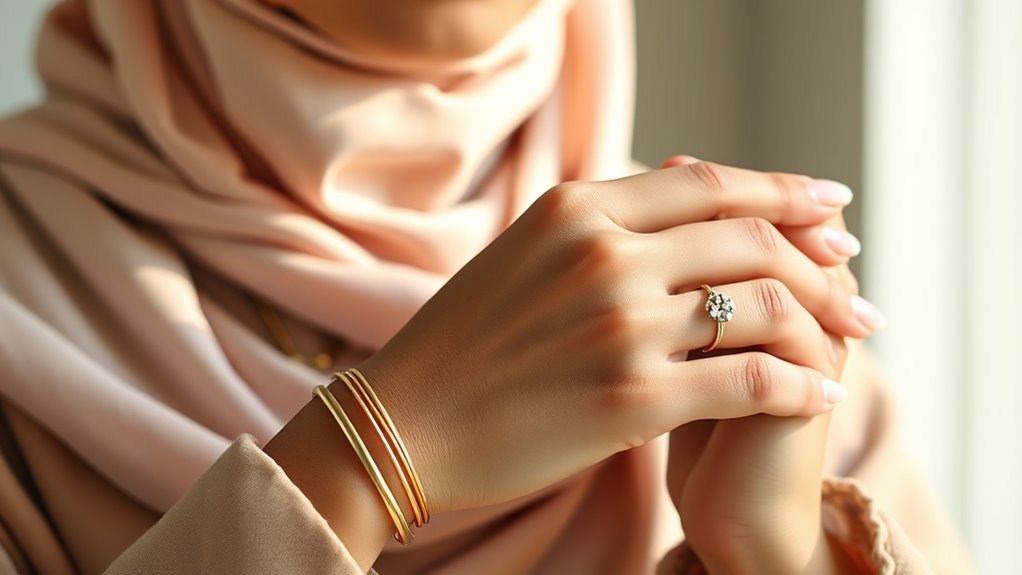
You can layer necklaces or stack rings thoughtfully to create a balanced look that aligns with Islamic values.
Jewelry Guidelines for Muslim Men
Jewelry plays a meaningful role in expressing faith and modesty for both Muslim women and men, though the guidelines differ.
As a Muslim man, you should follow specific jewelry guidelines that emphasize modest dress and simplicity.
Avoid wearing gold, as it’s generally discouraged for males.
Instead, opt for subtle pieces like simple iron rings and steer clear of anything ostentatious or that mimics women’s adornments.
Wearing jewelry that draws unnecessary attention contradicts modesty principles.
| Jewelry Type | Allowed? | Notes |
|---|---|---|
| Gold | No | Avoid wearing gold jewelry |
| Iron Rings | Yes | Simple, modest choice |
| Silver Jewelry | Generally No | May appear extravagant |
| Flashy Pieces | No | Avoid to maintain modesty |
Styling Tips for Islamic Jewelry
Although Islamic jewelry embraces modesty, you can still express your personal style with thoughtful choices.
Women can wear minimalist rings in gold, silver, or platinum to dress modestly while adding elegance.
Layer necklaces of varying lengths, pairing simple chokers with statement pendants like Ayatul Kursi, for a striking yet respectful look.
Mix metals and add gemstones or meaningful symbols to bracelets to incorporate color and significance.
Choose earrings that flatter your face shape—long styles for round faces and softer designs for angular ones—to enhance modest beauty.
Balance bold necklaces and earrings by keeping other accessories minimal.
Frequently Asked Questions
What Kind of Jewelry Are Muslims Allowed to Wear?
You can wear silver jewelry freely.
Women may wear gold moderately.
Jewelry with Quranic inscriptions or blessed symbols is allowed, while modesty matters—avoid ostentatious pieces.
Stick to materials with less than 50% gold content.
What Are the 8 Rules of Hijab?
Did you know over 60% of Muslim women follow the eight hijab rules?
You cover your entire body except for your face and hands.
Dressing modestly is key.
It’s important to avoid tight or transparent clothes.
Also, keeping adornments minimal helps maintain humility and respect.
What Are the Rules About Wearing Jewelry?
You shouldn’t wear gold jewelry if you’re a man.
Keep jewelry modest and not flashy.
Avoid pure gold or silver, and respect religious symbols by keeping them clean.
Handle them carefully in line with Islamic teachings.
What Does the Quran Say About Wearing Jewelry?
The Quran encourages you to wear jewelry modestly, avoiding ostentation and excessive display.
It guides you to reflect humility and faith, covering adornments appropriately while respecting religious symbols as meaningful expressions of devotion.
Conclusion
Wearing jewelry as a Muslim is like weaving a delicate thread through the fabric of faith and personal expression.
By following Islamic principles and respecting religious symbols, you honor both your beliefs and style.
Whether you’re a woman or a man, choosing pieces thoughtfully allows your jewelry to reflect your identity without compromising your values.
Embrace these guidelines, and let your adornments shine with both beauty and reverence.
In conclusion, wearing jewelry as a Muslim can be a beautiful blend of faith and personal style.
By adhering to Islamic principles and selecting pieces mindfully, you can express your identity while upholding your values.
So, embrace the joy of adornment, ensuring that your jewelry resonates with both your beliefs and your personal taste.
Let your choices reflect who you are, all while honoring the rich tapestry of your faith.