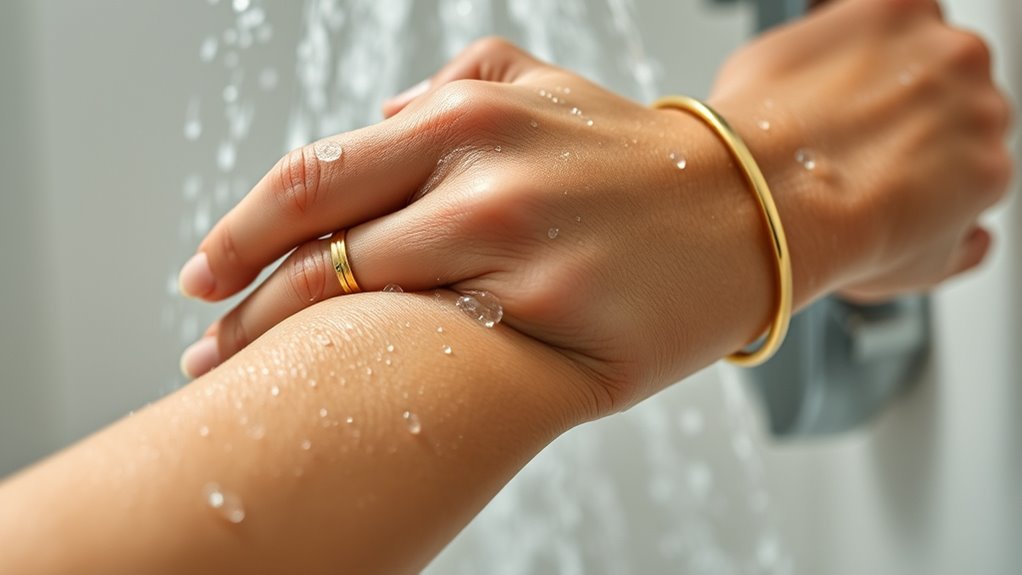
How to Shower Safely With Gold Jewelry
To shower safely with gold jewelry, it’s important to be mindful of the pieces you wear. Avoid delicate or gold-plated items, as they can tarnish easily and may not hold up well in water.
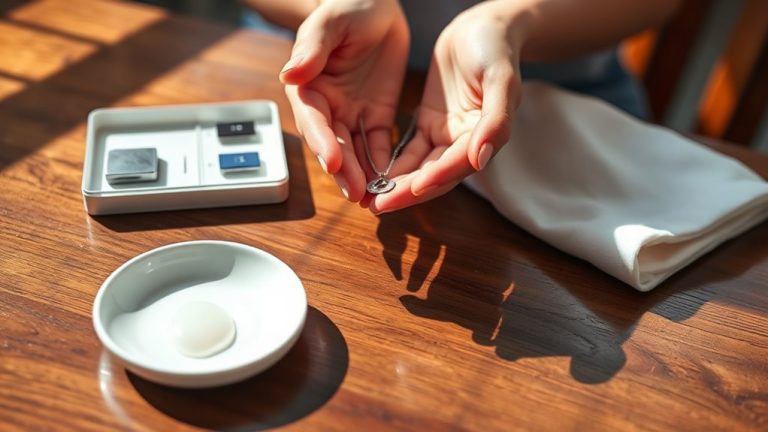
If you choose to keep on your solid or gold-filled jewelry, make sure to rinse them afterward. This helps remove any soap residue that could dull their shine.
Dry them thoroughly with a soft cloth to ensure they stay in great condition.
Also, removing your jewelry before shampooing is a smart move. It protects clasps and settings from potential water damage.
Finally, store your pieces in a dry place to maintain their shine and durability.
Keep these tips in mind, and you’ll find that caring for your gold jewelry becomes a breeze!
Understanding the Effects of Showering on Gold Jewelry

Although solid gold jewelry resists tarnish and corrosion, showering can still affect your gold pieces in various ways.
While solid gold stands up well to water exposure, moisture and soap residue can build up on any jewelry. This can dull its shine if you skip regular cleaning.
Gold-plated pieces, in particular, suffer more from water exposure. Their thin surface layers wear away, accelerating tarnishing and jewelry damage.
Harsh chemicals like chlorine or saltwater can exacerbate corrosion and reduce your jewelry’s durability. Repeated exposure to water might also weaken clasps and metal settings, risking loose stones or breakage over time.
To keep your solid gold and other gold jewelry looking their best and lasting long, you’ll want to clean them thoroughly.
Minimizing unnecessary moisture exposure whenever possible is also a good idea!
Differences Between Solid Gold, Gold Filled, and Gold Plated

When choosing gold jewelry, it helps to understand the differences between solid gold, gold filled, and gold plated options, as each type offers distinct qualities and durability.
Solid gold jewelry is made from pure gold in varying karats, which means it resists tarnish and corrosion due to the absence of a base metal.
Solid gold jewelry resists tarnish and corrosion because it contains pure gold without any base metals.
Gold filled jewelry, on the other hand, has a thick gold layer that is mechanically bonded to a base metal.
This provides durability close to solid gold, especially with proper maintenance.
Now, let’s talk about gold plated pieces. They feature a thin gold layer over a base metal, which makes them more prone to tarnish and wear, especially with water exposure.
While solid gold keeps its color indefinitely, gold filled jewelry can last decades if cared for properly.
In contrast, gold plated jewelry may fade or peel within a year.
Understanding these differences helps you better protect your jewelry.
Best Practices for Wearing Gold Jewelry in the Shower

Knowing the differences between solid gold, gold filled, and gold plated jewelry helps you make smarter choices about wearing them in the shower.
Solid gold jewelry offers good water resistance, so you can wear it briefly in the shower without much risk.
However, prolonged exposure to water, soaps, and chemicals can cause damage or tarnish, especially to gold plated and gold filled pieces.
To prevent tarnish, always remove your gold jewelry before showering when possible.
If your jewelry accidentally gets wet, rinse it with plain water and dry thoroughly using a soft cloth.
Afterward, store your gold jewelry in a dry, airtight container to minimize moisture exposure.
Regularly inspect your pieces for wear or loose settings to keep them safe and beautiful from daily shower exposure.
How to Clean and Maintain Gold Jewelry After Shower Exposure
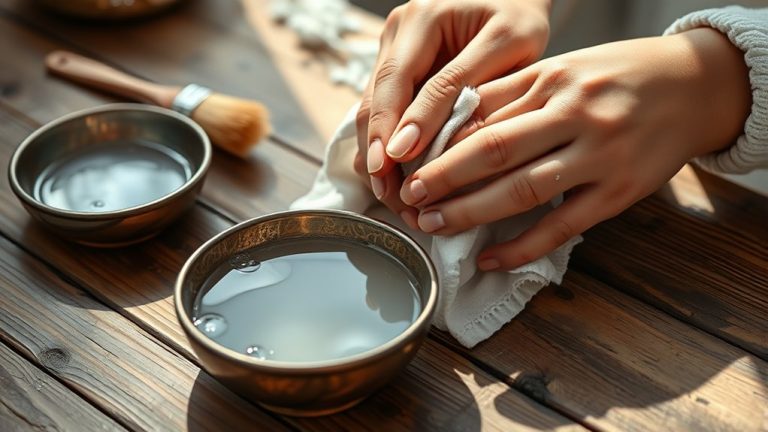
Since shower water often leaves soap residue and oils on your gold jewelry, you should rinse it with warm water and a mild soap solution right after exposure.
For effective cleaning, gently scrub it using a soft brush or cloth to remove dirt and prevent tarnish.
Afterward, thoroughly dry with a soft cloth, ideally microfiber, to avoid water spots and further tarnishing.
To protect your pieces from moisture and environmental damage, store jewelry in a dry, airtight container or jewelry pouch.
And don’t forget to schedule regular cleaning sessions with a professional jeweler, especially for valuable items, to maintain their shine and address any hidden issues.
Following these steps helps you keep your gold jewelry looking its best after water exposure.
Recognizing Signs of Damage and When to Seek Professional Care
Although gold is a durable metal, exposure to water and chemicals can cause visible damage that you shouldn’t ignore.
Gold’s durability can be compromised by water and chemicals, leading to noticeable damage that requires attention.
Watch for signs of wear like discoloration, dullness, or cloudiness, which signal early deterioration.
Tarnishing often appears as greenish or black marks on your skin or jewelry, indicating a reaction with base metals.
Loose stones or rough settings suggest water infiltration has weakened the structure, increasing gold damage risk.
Corrosion or peeling gold coating requires professional cleaning and assessment to prevent further harm.
Regular inspection by a jeweler helps identify these issues early and keeps your jewelry safe.
If you notice any of these signs, seek professional care promptly to maintain your gold’s brilliance and durability.
Frequently Asked Questions
Is It Okay to Shower With Gold Jewelry?
You can shower with solid gold jewelry, but it’s best to avoid wearing gold-plated pieces.
To keep your gold shiny and strong, remove your jewelry before showering.
Make sure to clean and store it properly afterward.
Does Shower Water Damage Gold?
Shower water doesn’t usually damage solid gold, but it can dull its shine and leave soap residue.
However, if you wear gold-plated pieces, water can wear off the gold layer and harm the jewelry over time.
Is It Okay to Wear 14K Gold Every Day?
Yes, you can wear 14K gold every day since it’s durable and resists tarnish.
Just avoid harsh chemicals, clean it gently, and occasionally get it professionally polished to keep it looking great over time.
Is It Okay for 14K Gold to Get Wet?
You might worry about water ruining your 14k gold, but it’s generally safe to get wet.
Just remember, repeated exposure to water and chemicals can dull its shine.
Conclusion
Showering with gold jewelry might seem harmless, but it can quietly dull your precious pieces over time.
Remember, not all gold is created equal—solid gold stands strong, while plated and filled varieties need extra care.
If you treat your jewelry like a trusted friend, it’ll shine bright for years.
So, protect your treasures and clean them gently after every shower—because even the smallest drop can whisper damage if you’re not careful.
In conclusion, while it may feel convenient to wear your gold jewelry in the shower, it’s wise to consider the potential risks.
By taking the time to care for your pieces, especially if they are plated or filled, you can ensure they remain beautiful for longer.
So, keep your gold jewelry safe, and don’t forget to give it a gentle clean after each shower to maintain its shine!