Are Ultrasonic Jewelry Cleaners Safe and How to Use Them Properly
You can safely use ultrasonic jewelry cleaners for most solid gold, silver, and diamond pieces by following proper steps.
Use a warm, mild cleaning solution, and avoid fragile stones like pearls or opals.
It’s important to limit cleaning time to just a few minutes.
Always arrange jewelry carefully to prevent any damage.
After cleaning, make sure to rinse and dry thoroughly.
Don’t forget to check your items afterward for any loose stones.
If you want to keep your jewelry sparkling without risk, understanding these tips is key.
By being mindful of these guidelines, you can ensure that your favorite pieces remain in top condition while enjoying the benefits of ultrasonic cleaning.
So, go ahead and keep your jewelry looking its best with confidence!
How Ultrasonic Jewelry Cleaners Work

Although it might seem like magic, ultrasonic jewelry cleaners work by sending high-frequency sound waves—usually between 20 kHz and 400 kHz—through a cleaning solution.
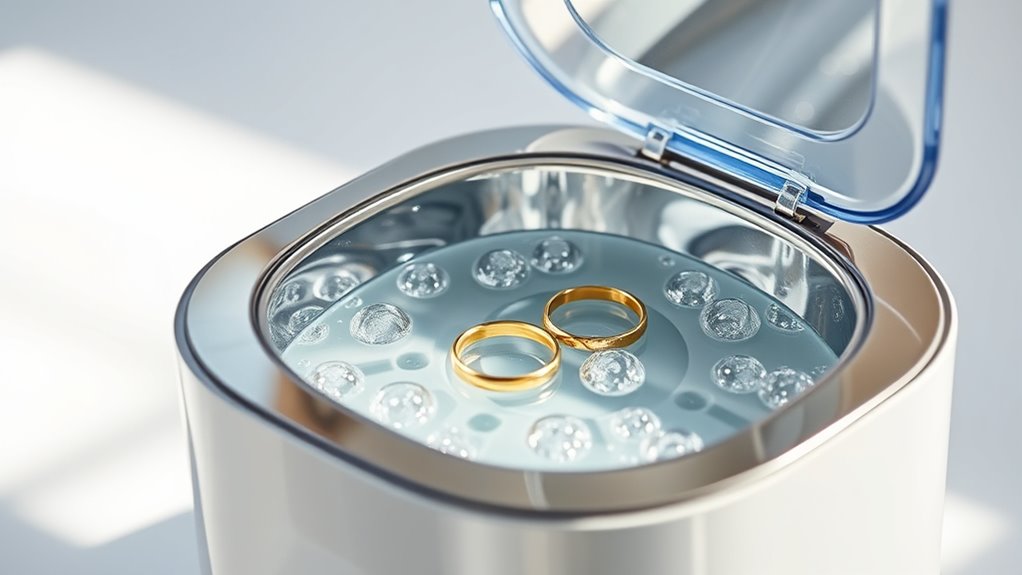
These ultrasonic sound waves create microscopic bubbles in the cleaning solution via cavitation.
Ultrasonic waves generate tiny bubbles through cavitation, effectively lifting dirt from your jewelry.
When these bubbles rapidly form and collapse, they generate localized pressure that lifts dirt and grime from your delicate jewelry.
This process reaches into intricate settings and hard-to-access areas, ensuring a thorough clean.
Specialized cleaning solutions with mild detergents or anti-tarnish agents boost the effectiveness of the cleaning cycle.
Typically, a cleaning cycle lasts from 3 to 10 minutes, depending on your jewelry’s material and dirt level.
Using this method, you can efficiently restore shine without damaging the pieces, thanks to the gentle yet powerful cavitation effect.
Jewelry Types That Are Safe for Ultrasonic Cleaning

When you choose to clean your jewelry with an ultrasonic cleaner, you need to know which pieces can handle the process safely.
Ultrasonic cleaning works best on sturdy metals and durable materials that won’t be damaged by vibrations or water exposure.
Here are three jewelry types safe for ultrasonic cleaning:
- Pieces made from precious metals like solid gold, platinum, and sterling silver.
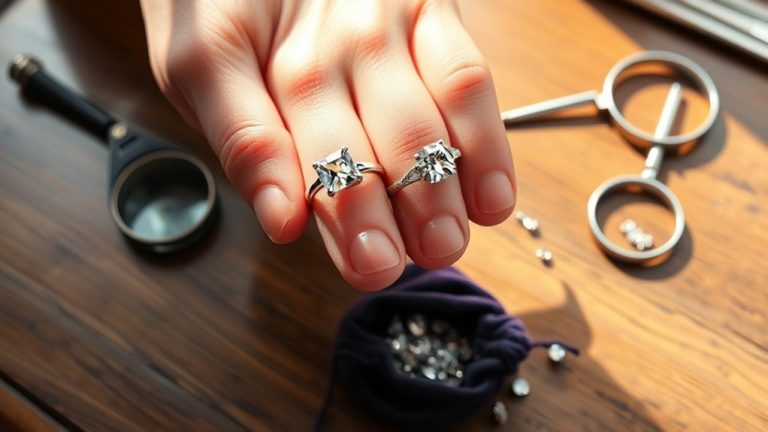
- Jewelry featuring lab-grown diamonds or natural diamonds, as they’re tough enough for ultrasonic cleaning.
- Items set with non-porous gemstones such as amethyst, topaz, or garnet, especially if the jewelry is waterproof.
Avoid using ultrasonic cleaners on delicate jewelry or porous stones to maintain cleaning safety and prevent damage.
Stick to these guidelines for effective, safe ultrasonic cleaning.
Jewelry That Should Be Avoided in Ultrasonic Cleaners

You should avoid using ultrasonic cleaners on fragile gemstones like pearls and opals, as they can absorb liquids and get damaged.
Delicate settings and glued components may loosen or break during the cleaning process.
Also, organic materials like coral and amber are too sensitive for ultrasonic vibrations and need gentler care.
Fragile Gemstone Risks
Because ultrasonic cleaners use powerful vibrations, they can easily damage fragile gemstones and delicate jewelry components.
You need to be aware of ultrasonic cleaning risks to protect your valuable pieces.
Some fragile gemstones and materials simply shouldn’t go near ultrasonic vibrations, including:
- Porous gemstones like pearls, opals, turquoise, and coral that absorb water and weaken.
- Organic materials such as ivory, amber, and shell cameos prone to cracking or discoloration.
- Heat-sensitive stones like tanzanite, fluorite, and topaz that may lose color or become damaged.
Additionally, gemstone treatments like fracture fillings can be compromised, reducing your jewelry’s appearance and value.
Prioritizing jewelry safety means avoiding ultrasonic cleaners for these sensitive items and opting for gentler methods to prevent gemstone damage.
Delicate Setting Concerns
Although ultrasonic cleaners effectively remove dirt and grime, they can pose risks to jewelry with delicate settings.
If you own fragile jewelry or pieces with glued settings, ultrasonic cleaning might loosen stones or damage prongs.
Antique jewelry often features delicate components that ultrasonic waves can dislodge or harm, increasing the damage risk.
Soft gemstones, like pearls and opals, are especially vulnerable to cracking or discoloration during ultrasonic cleaning, so you should avoid using these devices for such items.
To ensure jewelry preservation, always inspect your pieces for loose stones or fragile settings before cleaning.
Taking proper cleaning precautions helps protect your valuable items and keeps them looking their best without risking irreversible damage from harsh ultrasonic vibrations.
Organic Material Vulnerability
When cleaning jewelry made from organic materials like pearls, coral, or ivory, it’s best to steer clear of ultrasonic cleaners.
The vibrations from these machines can lead to cracks, discoloration, or loss of luster in your precious pieces.
These porous materials and organic gemstones are highly sensitive to ultrasonic cleaning, which increases the risk of damage.
So, if you want to preserve your organic jewelry, remember to hand clean it using gentle methods.
Here are a few risks associated with ultrasonic cleaning:
- Porous materials absorb heat and chemicals from solutions, which can cause staining or deterioration.
- Delicate stones like opal and turquoise are prone to cracking or losing their luster.
- The vibrations can physically harm soft, organic components such as shell cameos or amber.
To protect the beauty and longevity of your organic jewelry, it’s best to avoid ultrasonic cleaning altogether.
Benefits of Using Ultrasonic Jewelry Cleaners
You’ll appreciate how ultrasonic cleaners use high-frequency sound waves to reach every nook and cranny, giving your jewelry a deep, thorough clean.
They save you time by completing a full cleaning cycle in just a few minutes, so you don’t have to scrub manually.
Plus, they restore your pieces’ sparkle, making them look as brilliant as the day you got them.
Deep Cleaning Efficiency
Because ultrasonic jewelry cleaners use high-frequency sound waves to create microscopic cavitation bubbles, they reach deep into intricate settings and hard-to-access areas of your jewelry.
This ultrasonic cleaning process guarantees thorough cleaning and effective dirt removal without damaging delicate pieces.
Using specialized cleaning solutions enhances this deep cleaning ability, preserving your jewelry’s brilliance and longevity.
Here’s how ultrasonic cleaners excel:
- Cavitation bubbles penetrate tiny crevices, removing embedded grime traditional methods miss.
- Cleaning solutions combined with ultrasonic waves tackle tarnish and buildup gently yet efficiently.
- Short cycles (3–10 minutes) deliver quick, consistent results, promoting jewelry preservation.
Time-Saving Convenience
Although cleaning jewelry by hand can be time-consuming, ultrasonic jewelry cleaners let you freshen multiple pieces at once in just minutes.
This frees you from tedious scrubbing and detailed brushing.
This automatic cleaning process drastically reduces your cleaning time compared to manual cleaning.
With most ultrasonic cycles lasting only 3 to 10 minutes, you can achieve efficient cleaning and quick maintenance without much effort.
The ultrasonic jewelry cleaner dislodges dirt from intricate settings that manual cleaning often misses.
This makes your routine simpler and more convenient.
By streamlining the cleaning process, it saves you time and effort, letting you focus on enjoying your jewelry rather than maintaining it.
Choosing an ultrasonic cleaner means embracing convenience and saving time with every use.
Enhanced Jewelry Sparkle
Beyond saving time, ultrasonic jewelry cleaners considerably boost your pieces’ sparkle.
The cavitation process in an ultrasonic machine removes dirt from microscopic crevices, restoring up to 99% of your jewelry’s original brilliance.
Using a proper cleaning solution enhances light reflection, maximizing jewelry sparkle without harming delicate jewelry or gemstones.
For effective jewelry maintenance, follow these three steps:
- Choose a specialized cleaning solution compatible with your pieces.
- Run gentle cleaning cycles tailored to your jewelry’s durability.
- Regularly use ultrasonic cleaning to prevent buildup and maintain shine.
Risks and Limitations of Ultrasonic Jewelry Cleaners
When you use an ultrasonic jewelry cleaner, you need to be careful with delicate stones and settings since the vibrations can loosen or dislodge them.
Ultrasonic cleaners can cause damage to fracture-filled gemstones by cracking or removing treatments.
Ultrasonic cleaning may crack or strip treatments from fracture-filled gemstones, risking damage.
Porous gemstones like pearls, opals, and turquoise are especially vulnerable and may discolor or deteriorate.
Prolonged ultrasonic cleaning risks creating microfractures and weakening fragile or antique jewelry components.
Not all jewelry is suitable for ultrasonic cleaning—using it on inappropriate materials can lead to scratches, loosening of stones, or irreversible damage.
Always check material compatibility before cleaning and avoid ultrasonic cleaners for unsuitable jewelry to preserve its integrity and shine.
Selecting the Right Cleaning Solution for Ultrasonic Machines
Protecting your jewelry during ultrasonic cleaning doesn’t stop at choosing the right machine or knowing what to clean.
Selecting the correct cleaning solution is vital for gemstone safety and preserving compatible materials. Here’s what to keep in mind:
- Use only cleaning solutions formulated for ultrasonic cleaners. Professional solutions often include anti-tarnish agents to protect metal finishes.
- Mild dish soap mixed with warm water works well for many pieces. But avoid harsh chemicals like bleach, ammonia, or abrasive cleaners that can damage delicate stones.
- Always check manufacturer instructions to confirm the solution suits your jewelry’s materials and gemstones. This helps you avoid enzymatic or abrasive cleaners that risk scratches or degradation.
Following these guidelines ensures your ultrasonic cleaner safely revitalizes your jewelry without harm.
Step-by-Step Guide to Using an Ultrasonic Jewelry Cleaner
Before you start cleaning, make sure you’ve selected the right solution and prepared your ultrasonic cleaner properly.
Fill the tank with warm water and add a few drops of your chosen cleaning solution.
For placement, carefully arrange each piece of jewelry so they don’t touch each other or the tank’s sides.
Set the cleaning cycle based on the jewelry type—3 to 5 minutes for delicate jewelry and longer for sturdier items.
Always adjust the settings according to the manufacturer’s guidelines and take necessary precautions.
Once the cycle ends, use plastic tweezers to remove the items.
Rinse them thoroughly under lukewarm water, then dry with a soft, lint-free cloth.
Finally, inspect your jewelry for any damage or loose stones before storing it safely.
How Often Should You Use an Ultrasonic Jewelry Cleaner?
How often should you clean your jewelry with an ultrasonic cleaner?
Your ultrasonic cleaning frequency depends on your jewelry type and usage.
For effective jewelry maintenance, follow this cleaning schedule:
- Clean frequently worn pieces every 2 to 4 weeks to keep them sparkling.
- Limit cleaning delicate jewelry, especially antiques, to once every 2 to 3 months to avoid jewelry damage.
- For high-value items with soft or porous gemstones, rely on professional cleaning or less frequent ultrasonic use to ensure material safety.
Always adhere to cleaning guidelines and consider your jewelry’s material and condition.
Overuse can weaken settings and shorten jewelry lifespan.
When to Consult a Professional for Jewelry Cleaning
If you’re unsure whether your jewelry can safely handle ultrasonic cleaning, it’s wise to consult a professional jeweler.
They provide expert jewelry assessment to ensure ultrasonic cleaning safety, especially for valuable and antique pieces.
Delicate gemstones and porous stones like pearls or emeralds require special care to avoid damage.
Handle delicate gemstones and porous stones such as pearls and emeralds with special care to prevent damage.
A professional jeweler can identify loose stones, repairs needed, or existing damage that ultrasonic vibrations might worsen.
Consulting an expert helps with jewelry damage prevention by recommending the safest cleaning methods tailored to your pieces.
Instead of risking harm, rely on a professional jeweler’s expertise to protect your treasured items and maintain their beauty over time.
Frequently Asked Questions
What Jewelry Cannot Be Cleaned in an Ultrasonic Cleaner?
You shouldn’t clean pearls, opals, turquoise, coral, amber, or tortoise shell in an ultrasonic cleaner.
Avoid fragile, antique, glued, or treated stones too, since ultrasonic waves can damage or loosen these delicate materials and settings.
What Are the Downsides of Ultrasonic Cleaners?
Ultrasonic cleaners can loosen stones, cause scratches, or damage delicate settings.
They might harm porous gems like pearls and opals.
Excessive use can weaken joints or crack fragile stones.
Use cautiously to avoid damage.
Do Ultrasonic Cleaners Really Clean Jewelry?
Think of ultrasonic cleaners as tiny underwater vacuums; they really do clean jewelry by blasting away dirt and grime from every nook.
You’ll see your pieces sparkle like new when you use them properly.
Can I Use Dawn Dish Soap in My Ultrasonic Jewelry Cleaner?
Yes, you can use a few drops of Dawn dish soap mixed with warm water in your ultrasonic cleaner.
Just avoid scented or harsh soaps.
Always rinse your jewelry thoroughly afterward to prevent residue buildup.
Conclusion
Using an ultrasonic jewelry cleaner is like giving your treasures a gentle, sparkling rain—reviving their shine with ease.
But remember, not all gems dance well in these sonic waves; some need a softer touch.
By choosing the right pieces and solutions, and cleaning thoughtfully, you’ll keep your jewelry glowing like stardust.
When in doubt, don’t hesitate to call in a professional—because your precious keepsakes deserve nothing less than brilliance perfected.
In conclusion, ultrasonic jewelry cleaners can effectively clean many types of jewelry, but caution is key.
Always check which materials are safe for ultrasonic cleaning to avoid damage.
If you’re unsure, consulting a professional is a smart move.
With the right approach, your jewelry can shine brilliantly, reflecting the beauty of your cherished pieces. Remember, taking care of your jewelry ensures they remain timeless treasures!