What Is Stainless Steel Jewelry and Why Choose It?
Stainless steel jewelry is a popular choice for many due to its remarkable durability and resistance to wear and tear. This alloy, composed of iron, chromium, and nickel, is specifically designed to withstand rust, scratches, and tarnish.
You’ll love its long-lasting shine and hypoallergenic properties, making it an excellent option for those with sensitive skin. Plus, it’s more affordable than precious metals, which is always a bonus!
Another great aspect of stainless steel is its eco-friendliness. It’s highly recyclable and built to last, reducing waste in the long run.
If you’re curious about how to care for your stainless steel jewelry or want tips on styling it effortlessly, there’s so much more to discover about this versatile metal!
Definition and Composition of Stainless Steel Jewelry

Stainless steel jewelry is crafted from an alloy mainly composed of iron, chromium, and nickel, which gives it impressive durability and resistance to corrosion.
The chromium in this alloy forms a thin, protective oxide layer on the surface, preventing rust and tarnish.
This ensures your jewelry stays looking fresh.
Because stainless steel contains this unique alloy blend, it offers superior corrosion resistance compared to many other metals.
Stainless steel’s unique alloy blend delivers exceptional corrosion resistance unmatched by many metals.
You’ll find that this material resists scratches, impacts, and everyday wear, making it a practical choice for daily use.
Thanks to its corrosion resistance and tough alloy composition, stainless steel jewelry maintains its shine and strength over time.
Key Grades Used in Stainless Steel Jewelry

When choosing stainless steel jewelry, you’ll find that grades 316L and 304 are the most common, each offering distinct benefits in durability and appearance.
Stainless steel grades like 316L, also called surgical steel, provide excellent corrosion resistance and are hypoallergenic. This makes them perfect if you have sensitive skin.
Plus, this grade supports intricate designs and plating, ensuring your jewelry stays looking sharp over time.
On the other hand, grade 304 offers good corrosion resistance at a more affordable price but contains less nickel and molybdenum than 316L.
Understanding these key grades helps you pick jewelry that fits your style, wear conditions, and skin sensitivity.
Choosing the right stainless steel grade guarantees durability and comfort in your everyday accessories.
Advantages of Wearing Stainless Steel Jewelry

Because you want jewelry that lasts and looks great every day, choosing stainless steel is a smart move.
Stainless steel offers exceptional durability, resisting scratches, dents, and corrosion so your pieces stay pristine even with daily wear.
You won’t have to worry about tarnish or fading, as stainless steel maintains its shine despite exposure to water or environmental elements.
Plus, it’s low maintenance—you can keep it looking new with just simple cleaning, saving you time and effort.
Beyond its practical benefits, stainless steel is an affordable alternative to precious metals, giving you stylish options without breaking the bank.
With stainless steel jewelry, you get lasting beauty and strength, making it a reliable and smart choice for your everyday accessories.
Hypoallergenic and Safety Features
You’ll appreciate that stainless steel jewelry is hypoallergenic, making it ideal if you have sensitive skin or allergies.
High-quality grades like 316L use minimal nickel, so you won’t have to be concerned about irritation.
Plus, its biocompatibility ensures comfort even during extended wear.
Hypoallergenic Benefits Explained
Although some metals cause skin irritation, stainless steel jewelry won’t bother your sensitive skin thanks to its hypoallergenic properties.
This metal, especially high-quality grades like 316L, contains very little nickel, which helps reduce allergy risks.
Its biocompatibility means it won’t trigger skin irritation or worsen existing skin conditions.
Here’s why hypoallergenic stainless steel jewelry stands out:
- Minimizes allergic reactions due to low nickel content
- Suitable for all ages and safe for piercings
- Maintains safety with regular cleaning to avoid irritant buildup
Choosing stainless steel means you can enjoy stylish accessories without worrying about skin irritation.
Its hypoallergenic nature ensures comfort and safety, making it a smart choice for everyday wear.
Safe for Sensitive Skin
Stainless steel jewelry offers more than just hypoallergenic benefits—it provides reliable safety for sensitive skin as well.
When you choose stainless steel, especially grades like 316L, you’re opting for a material that’s hypoallergenic and unlikely to cause irritation or allergic reactions.
Its excellent biocompatibility means it’s safe for prolonged wear, reducing the risk of dermatitis even if you have sensitive skin.
Unlike nickel-based alloys, high-quality stainless steel contains minimal impurities that often trigger allergies.
This makes it a safe choice for all ages, including for piercings where skin safety is essential.
Plus, stainless steel’s resistance to tarnishing and corrosion ensures it stays safe and comfortable over time, protecting your sensitive skin from harmful reactions.
Biocompatibility and Comfort
Because it’s hypoallergenic and biocompatible, stainless steel jewelry offers exceptional comfort for those with sensitive skin.
You won’t have to worry about allergic reactions or irritation when wearing it daily. Its biocompatible nature means it won’t interfere with your body’s functions or medications, making it a safe choice for everyone.
High-quality grades like 316L contain minimal nickel, further reducing allergy risks.
Plus, the smooth, non-porous surface keeps bacteria away, preventing skin issues during prolonged wear.
When you choose stainless steel jewelry, you benefit from:
- Hypoallergenic properties that protect sensitive skin
- Biocompatible materials ensuring safe, comfortable wear
- Durable, bacteria-resistant surfaces for long-lasting comfort
This makes stainless steel jewelry a smart, comfortable option for everyday accessories and piercings alike.
Environmental and Sustainability Benefits
When you choose jewelry made from stainless steel, you support a highly recyclable material that’s nearly 100% recoverable and repurposable.
Stainless steel often comes from recycled metals sourced from industrial machinery, architecture, and vehicles, making it an environmentally friendly choice.
Stainless steel jewelry is crafted from recycled metals from machinery, architecture, and vehicles, promoting eco-friendly fashion.
By opting for stainless steel, you reduce the demand for virgin precious metals, which lessens environmental strain.
Its durability means your jewelry lasts longer, cutting down on waste and the need for frequent replacements.
This longevity aligns perfectly with sustainable fashion principles, encouraging responsible consumption and waste reduction.
Common Uses and Styles in Stainless Steel Jewelry
Although it’s known for its strength and resilience, stainless steel also offers impressive versatility in jewelry design.
You’ll find stainless steel jewelry in a variety of styles, making it easy to match your personal taste or occasion. Its adaptability shines through modern geometric patterns, industrial-inspired pieces, and engraved motifs.
Plus, the material supports multiple finishes—brushed, matte, glossy, or engraved—giving you plenty of options to express yourself.
Common uses and styles include:
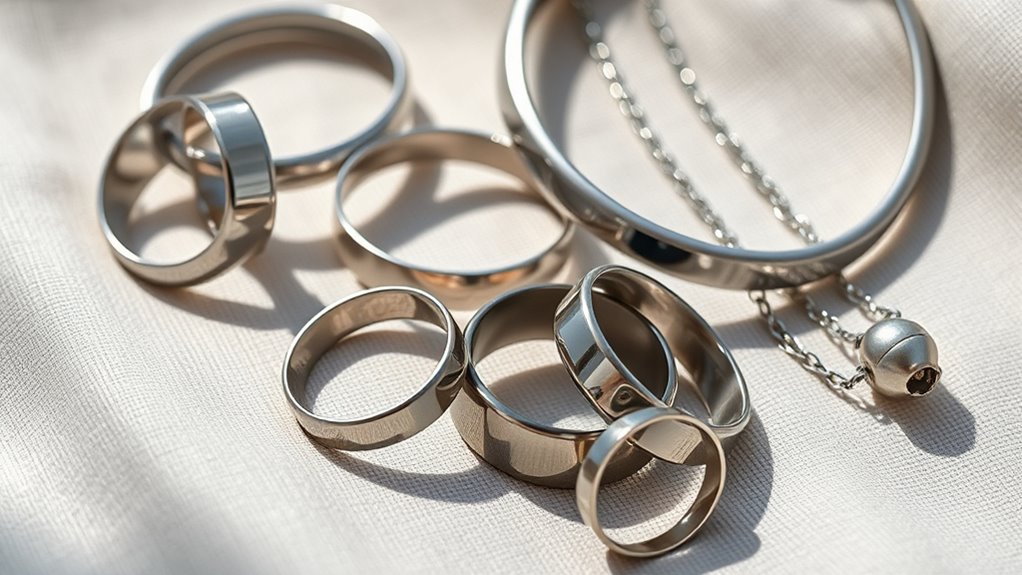
- Minimalist rings, bold statement necklaces, and sleek bracelets that highlight versatility.
- Everyday essentials like earrings and body piercings, favored for durability and hypoallergenic qualities.
- Mixed metal pieces combining stainless steel with gold, silver, or zirconia for added contrast and style.
This variety proves just how flexible stainless steel jewelry can be.
Challenges and Limitations of Stainless Steel Jewelry
When you choose stainless steel jewelry, keep in mind it’s tough to resize or restore once scratched or dulled.
Harsh chemicals like chlorine can cause discoloration, so you’ll need to handle it carefully.
Also, don’t expect it to increase in value or be a good investment for resale.
Value and Resale
Stainless steel jewelry offers an affordable and stylish option, but you shouldn’t expect it to hold or increase its value over time.
As a budget-friendly choice, it’s popular for everyday wear but has low appreciation in the resale market. Its resale value remains limited because it lacks precious metals that typically boost worth.
Keep these points in mind when considering value and resale:
- Stainless steel’s hardness makes resizing tough, reducing adaptability and resale potential.
- Scratches and dullness are hard to fix, which can lower its appeal to buyers.
- Mass production and affordability mean it rarely gains value in secondary markets.
Adjustment and Restoration
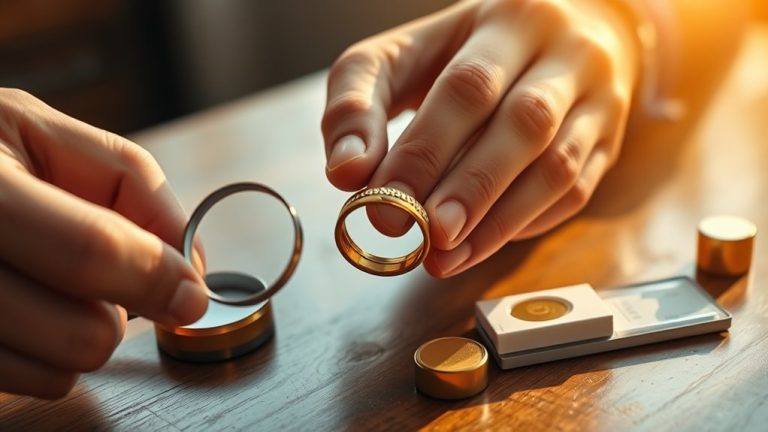
Because of its hardness and resistance to bending, adjusting the size of stainless steel jewelry can be quite challenging.
You’ll find that sizing adjustments require special tools or professional help since reshaping the metal isn’t easy.
When it comes to restoring your piece, scratches or dullness pose another problem.
Stainless steel resists traditional polishing methods used on softer metals, making it tough to bring back its original shine.
If your jewelry suffers dents from heavy impacts, repairs often need expert intervention.
Polishing options are limited, so restoring a flawless surface takes skill and patience.
Knowing these challenges helps you set realistic expectations for maintenance.
This way, you can ensure your stainless steel jewelry stays beautiful without unnecessary frustration.
Chemical Sensitivity
Although stainless steel jewelry is prized for its durability, it can cause skin irritation for some people due to the presence of nickel and other allergenic elements.
If you have chemical sensitivity, nickel in the alloy might trigger allergic reactions, especially with prolonged wear.
Even high-grade stainless steel can sometimes cause discomfort for extremely sensitive skin.
To minimize issues, consider these points:
- Avoid exposure to harsh chemicals like chlorine, which can corrode or discolor your jewelry and worsen skin reactions.
- Choose pieces labeled “nickel-free” to reduce the risk of allergic responses.
- Clean your jewelry regularly to remove sweat and oils that can increase irritation.
Best Practices for Cleaning and Maintenance
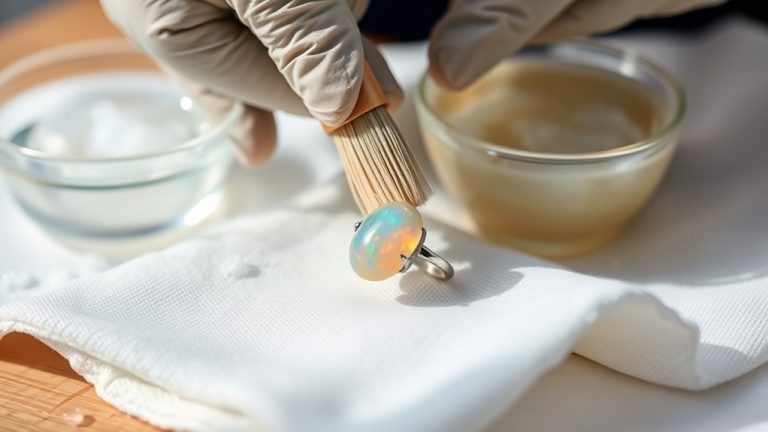
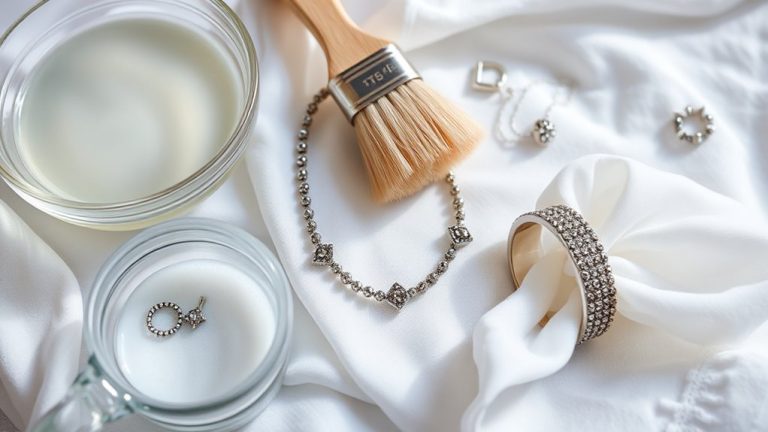
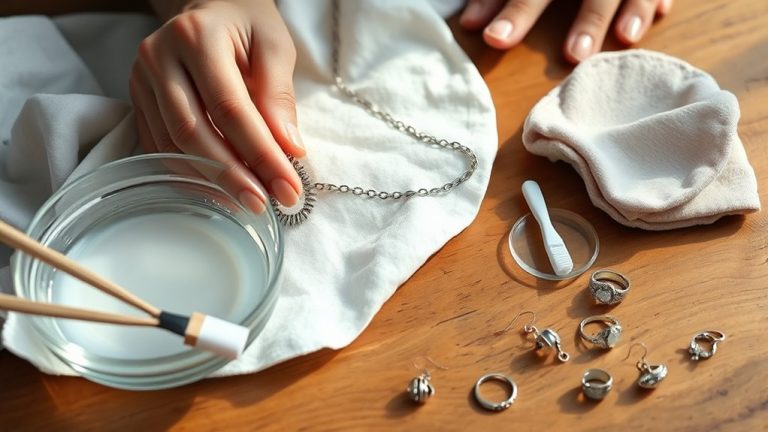
When you want to keep your stainless steel jewelry looking its best, regular cleaning with mild soap and water is key.
Use a soft cloth or brush to gently remove dirt and oils, helping you clean stainless steel without causing damage.
Avoid harsh chemicals like bleach, chlorine, or sulfur baths, as they can lead to corrosion or discoloration.
For maintenance, wipe your pieces with a microfiber or soft polishing cloth to maintain their shine and remove smudges.
Also, store your jewelry separately in compartments or pouches to prevent scratches and abrasion.
Stay away from abrasive cleaners or toothpaste, since they can scratch or dull your jewelry’s finish.
Following these best practices guarantees your stainless steel jewelry stays beautiful for years.
Styling Tips for Stainless Steel Jewelry
If you want to elevate your look effortlessly, stainless steel jewelry offers versatile styling options that fit both casual and business casual outfits.
Its durability and sleek finish provide endless style inspiration, perfect for adding subtle sophistication or bold accents.
Try these tips to showcase stainless steel’s versatility:
- Pair stainless steel necklaces with neutral or minimalist outfits for a modern, polished appearance.
- Layer stainless steel bracelets with gold or silver pieces to create trendy contrast and dimension.
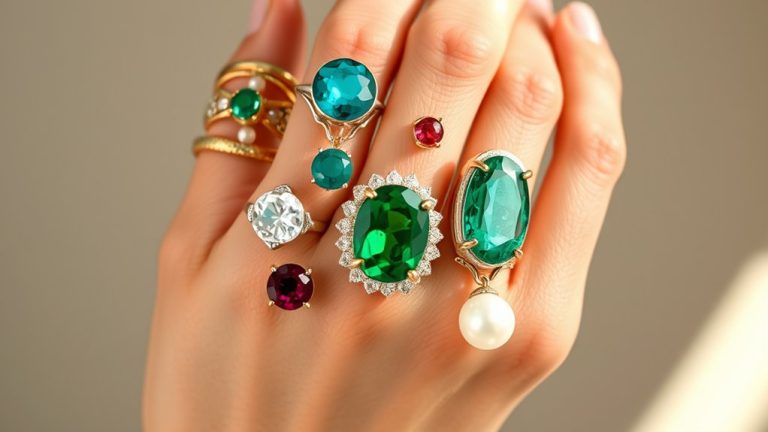
- Choose rings or earrings with gemstones or zirconia to introduce elegance and visual interest.
Frequently Asked Questions
Why Choose Stainless Steel Jewelry?
You should choose stainless steel jewelry because it’s durable, hypoallergenic, affordable, and stylish.
It resists scratches and tarnish, requires little maintenance, and supports eco-friendly practices—all while offering versatile designs that suit your everyday look.
Plus, you’ll find that it pairs well with just about anything in your wardrobe!
Which Is Better, 18 0 or 18 8 or 18 10 Stainless Steel?
You’ll find 18/10 stainless steel better because it offers the highest corrosion resistance and durability.
18/8 is good too, but 18/0 lacks nickel.
This makes it less resistant and less suitable for lasting jewelry.
What Are the Downsides of Stainless Steel Jewelry?
About 10% of stainless steel jewelry owners face resizing issues since it’s tough to alter.
You’ll also find it heavy, prone to dulling, and sometimes causes skin reactions if it contains nickel.
What Is the Healthiest Metal for Jewelry?
The healthiest metal for jewelry is stainless steel, especially grade 316L.
It’s hypoallergenic, resists tarnishing, and won’t irritate your skin.
You’ll enjoy durable, safe, and comfortable wear every day without allergic reactions.
Conclusion
Choosing stainless steel jewelry means embracing pieces that are not only stylish but also quietly durable and kind to your skin.
You’ll appreciate its subtle strength and easy upkeep, making it a low-maintenance treasure in your collection.
While it may not shine like precious metals, its unique charm and thoughtful design offer an invigorating alternative.
So, go ahead—add a touch of stainless steel sophistication to your everyday look with confidence and grace.
In conclusion, stainless steel jewelry is a fantastic choice for anyone looking to combine style with durability.
Its hypoallergenic properties make it gentle on the skin, while its low-maintenance nature ensures it stays beautiful with minimal effort.
Plus, its distinctive appeal allows you to express your personality in a unique way.
So why not enhance your jewelry collection with stainless steel pieces that are both fashionable and long-lasting?