What Does 926 Mean on Jewelry?
When you see “926” on jewelry, it typically indicates that the piece contains 92.6% pure metal. This is often silver or 22-karat gold, especially in Italian items.
It’s a mark of high quality, but it can sometimes be confused with sterling silver, which contains 92.5% silver.
To ensure authenticity and value, it’s crucial to verify the piece through professional testing.
So, keep exploring to understand how these marks can affect your jewelry’s worth.
And remember, knowing how to confirm its purity can help you make informed decisions when it comes to buying or selling!
Understanding the 926 Stamp in Jewelry

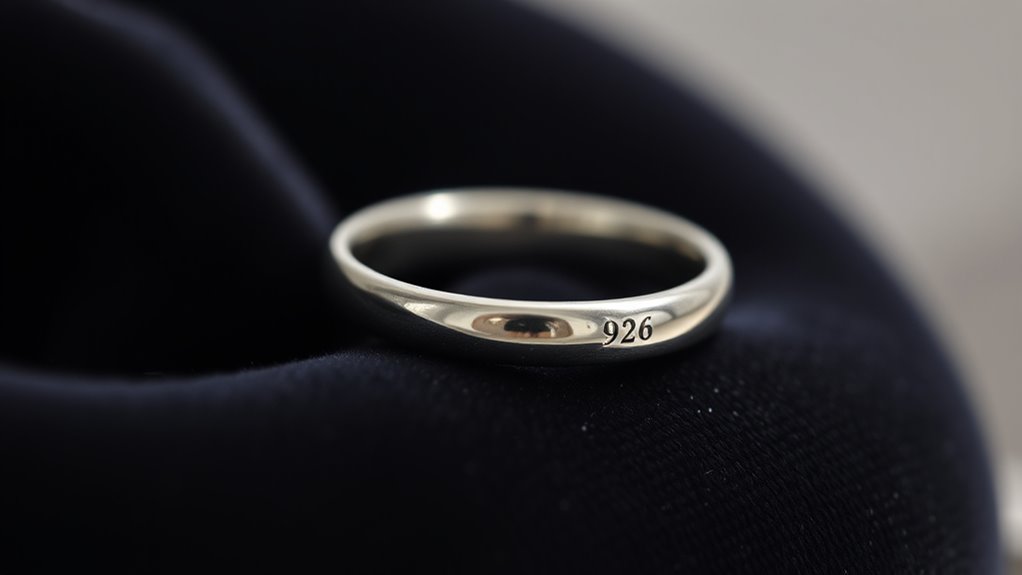
Although the “926” stamp isn’t as common as the standard “925” mark, it often indicates a metal purity of 92.6%, whether in silver or gold jewelry.
When you see “926” on silver pieces, it usually means a slightly higher purity than typical sterling silver, which contains 92.5% silver.
In gold jewelry, especially from Italy, “926” can represent 22-karat gold, reflecting 92.6% pure gold content.
This subtle difference might seem minor, but it can affect the piece’s value and quality.
Keep in mind that “926” can sometimes be a regional variation or even a misprint, so it’s wise to have your jewelry tested professionally if you want to be sure.
Understanding this mark helps you appreciate the craftsmanship and authenticity behind your pieces.
Differentiating 926 Silver From Sterling Silver

You’ll notice 926 silver contains slightly more pure silver than standard sterling silver, which is marked .925.
To tell them apart, look for official hallmarks or maker’s marks.
But don’t rely on the stamp alone for authenticity.
Testing the metal professionally can help confirm its value and genuine silver content.
Silver Purity Comparison
How does 926 silver differ from the more common sterling silver?
Both are high-quality silver alloys, but 926 silver contains 92.6% pure silver, slightly higher than sterling silver’s 92.5%.
This subtle difference means 926 silver is marginally purer, though both offer similar durability and tarnishing behavior.
While sterling silver is widely recognized by the “925” mark, 926 silver is less common and sometimes varies by region or manufacturer.
Here’s a quick comparison to help you understand their key distinctions:
| Feature | 926 Silver |
|---|---|
| Silver Content | 92.6% |
| Standard Marking | 926 |
| Commonality | Less common |
| Tarnishing Behavior | Similar to sterling |
Knowing these details helps you appreciate the subtle purity differences in your silver jewelry.
Hallmark Identification Tips
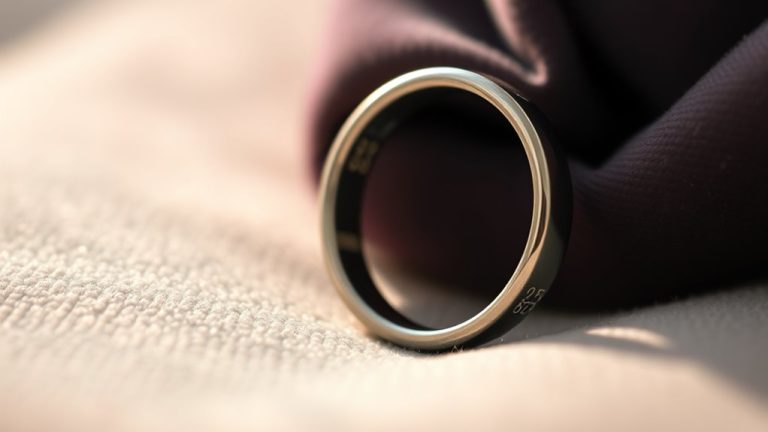
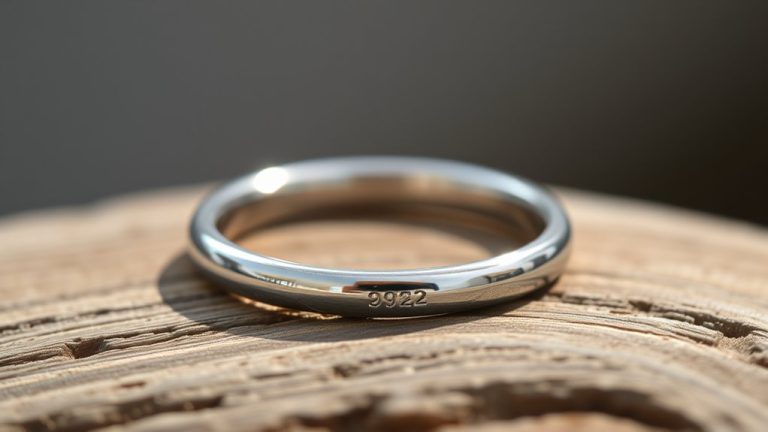
When you want to tell 926 silver apart from sterling silver, start by closely examining the jewelry’s stamps or hallmarks.
Authentic 926 silver will usually have a clear “926” stamp, sometimes alongside a maker’s mark, indicating its 92.6% silver content, slightly higher than sterling’s 92.5%.
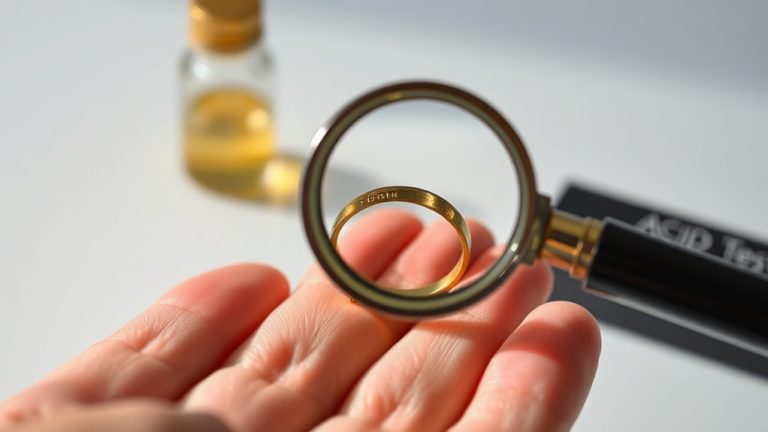
Use a magnifying glass to inspect these stamps carefully, ensuring they’re official and not just decorative.
Genuine hallmarks are precise and well-defined, helping you differentiate true 926 silver from sterling or plated pieces.
Besides stamps, look for natural tarnish and patina that develop over time, as 926 silver is non-magnetic and tends to age naturally.
While these hallmark identification tips can guide you, remember that professional testing is the best way to confirm your jewelry’s metal content.
Value and Authenticity
Although the “926” mark might look similar to sterling silver’s “925,” it often represents a different metal or purity level, especially in gold jewelry.
You’ll find that “926” usually indicates 22-karat gold, particularly in Italian pieces, rather than silver.
This difference affects both value and authenticity.
Genuine silver typically bears “925” or “Sterling” stamps, so seeing “926” should prompt you to verify the metal type.
To confirm authenticity, rely on official hallmarks and expert appraisal.
Also, consider the item’s origin because “926” can be a regional or manufacturer-specific mark.
Without proper testing, you might mistake a high-quality gold alloy for silver, impacting the jewelry’s true value.
Always get professional verification to ensure you know exactly what you’re buying or selling.
When 926 Indicates 22 Karat Gold

When you see a “926” mark on jewelry, it often signals 22 karat gold, especially in Italian pieces.
This number means the gold content is 92.6% pure, reflecting a high-quality standard.
Understanding this mark helps you recognize the true value and origin of your gold jewelry.
Italian Jewelry Gold Mark
One common hallmark you’ll find on Italian jewelry is the number 926.
This signifies that the piece is crafted from 22-karat gold.
This number serves as a makers mark, indicating the gold content is 92.6% pure, a slightly less pure alloy compared to 24K gold.
When you see 926 stamped on an Italian piece, it confirms the jewelry’s authenticity and high quality.
Keep in mind:
- 926 represents 926 parts gold per 1,000 parts alloy.
- It’s widely used in vintage and traditional Italian gold jewelry.
- The makers mark helps verify the origin and purity of the gold.
- Always check for additional hallmarks to verify genuine Italian craftsmanship.
This hallmark helps you identify valuable 22K gold Italian jewelry at a glance.
Gold Purity and Meaning
Since the number 926 often appears on Italian jewelry, you might wonder what it means for gold purity.
When you see jewelry stamped with “926,” it typically indicates 22 karat gold, which means the gold purity is 92.6%.
This is higher than the common 18K gold, marked as 750 (75% purity).
The 926 stamp is mostly used in Italy to signify high-quality gold pieces.
Here’s a quick comparison:
| Marking | Gold Purity (%) | Karat | Meaning |
|---|---|---|---|
| 925 | 92.5 | Sterling | Silver standard |
| 926 | 92.6 | 22K Gold | High gold purity |
| 750 | 75 | 18K Gold | Common gold jewelry |
| 585 | 58.5 | 14K Gold | Mid-range gold purity |
| 375 | 37.5 | 9K Gold | Lower gold purity |
Always confirm with testing since marks can vary.
Identifying Vermeil and Its Relation to 926 Markings
Understanding the significance of a “926” marking on vermeil jewelry can help you determine its gold purity and authenticity.
Vermeil typically features a thick gold layer over a sterling silver core, often marked with “925” to indicate the silver base.
The “926” stamp, however, may point to a higher gold purity—around 22-karat gold (92.6%)—especially in Italian vermeil pieces.
It’s important to note that “926” sometimes appears as a misprint or regional variation.
To identify vermeil and its relation to 926 markings, consider these factors:
- Presence of “925” marking for sterling silver base
- Thickness and quality of the gold layer
- Whether “926” indicates gold purity rather than silver
- Regional or manufacturer-specific marking variations
This understanding guides you in evaluating vermeil jewelry accurately.
Methods to Verify the Authenticity of 926 Marked Jewelry
Although the “926” stamp can indicate valuable metals, you’ll want to verify its authenticity before making any assumptions.
Start by inspecting the hallmark with a magnifying glass—look for clarity, proper engraving, and consistency with official marks.
Compare it against reputable guides to ensure the stamp style and placement match verified 926 examples.
You can also check for additional hallmarks or maker’s marks that confirm origin.
Use a magnet to test if the piece is non-magnetic, as genuine silver and gold alloys usually are.
Finally, professional testing like acid tests or X-ray fluorescence (XRF) offers conclusive results.
| Method | Purpose |
|---|---|
| Magnifying Glass | Inspect clarity and engraving |
| Reference Guides | Compare hallmark style and placement |
| Magnet Test | Check non-magnetic properties |
| Professional Testing | Confirm metal purity and authenticity |
The Importance of Professional Testing for Accurate Valuation
When you come across jewelry marked “926,” you can’t rely on visual inspection alone to determine its true value.
Professional testing is vital to accurately identify the metal content and avoid costly errors. Techniques like metal detecting and laboratory tests provide clear results.
Professional testing ensures accurate metal identification, preventing costly mistakes through precise detection and laboratory analysis.
Here’s why you should opt for expert analysis:
- Specialized equipment, such as XRF analyzers, precisely determines if the piece is gold, silver, or another metal.
- Acid testing confirms the metal’s purity when markings like “926” are ambiguous or misprinted.
- Certified professionals offer accurate appraisals essential for buying, selling, or insuring jewelry.
- Relying on expert testing prevents misjudgments and guarantees correct valuation.
Trusting professional testing safeguards your investment and gives you confidence in the true worth of your “926” jewelry.
Frequently Asked Questions
Is 926 Sterling Silver Real?
Yes, 926 sterling silver is real and contains slightly more silver than standard sterling.
You should check for authentic hallmarks and consider professional testing to confirm its genuineness before trusting the mark alone.
What Does 926 Mean in Jewellery?
You’ll find 926 on jewelry usually means it’s 22-karat gold, especially in Italian pieces.
Sometimes it’s confused with 925 silver, so you should get it tested to be sure what metal you actually have.
What Is the Difference Between 925 and 926 Silver?
Think of 925 and 926 silver as siblings—926’s just a tiny bit purer, like an older sibling with a slight edge.
You’ll barely notice the difference,
but 926 can mean slightly higher value and rarity in your jewelry.
Is 926 Silver a Good Investment?
Yes, 926 silver can be a good investment if you verify its authenticity and keep it well-maintained.
Its slightly higher purity than sterling silver may increase value, especially when market prices and demand rise.
Conclusion
Now that you know what the 926 stamp means, remember it often indicates silver slightly purer than sterling, which is 92.5% silver.
Remarkably, 926 silver contains 92.6% silver, making it just a bit more valuable.
When you spot 926 on jewelry, it’s worth verifying authenticity, especially since 22 karat gold can also use similar markings.
Getting professional testing ensures you truly know your jewelry’s value and quality.
In conclusion, the 926 stamp on jewelry signifies a silver content of 92.6%, slightly above the standard for sterling silver.
This small difference can make a notable impact on value.
Always verify the authenticity of jewelry marked with 926, as it can prevent confusion with other similar markings.
Professional testing can provide clarity on both the quality and worth of your pieces, ensuring you’re informed about your jewelry’s true value.