What Does 825 Mean on Jewelry?
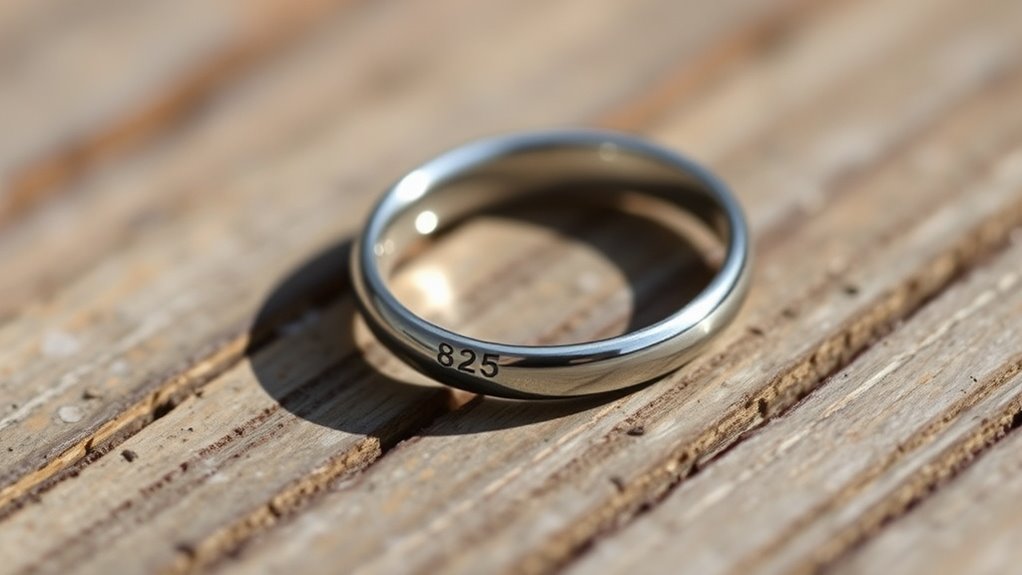
When you see “825” stamped on jewelry, it indicates that the piece contains about 82.5% pure silver or gold mixed with other metals to enhance its strength.
For silver, this is less pure than sterling silver.
On the other hand, for gold, it roughly equates to 19.8 karats.
This mark is commonly found on European or vintage pieces and serves as a helpful indicator of quality.
However, it’s always important to verify the source for authenticity.
If you’re curious about the full significance of the “825” stamp and how to care for such jewelry, keep exploring the details!
Understanding the 825 Mark on Jewelry

When you see the 825 mark on jewelry, it tells you the piece contains 82.5% pure metal, usually gold or silver, mixed with other alloys.
For silver, this means the purity is lower than sterling silver, which is 92.5% pure. The 825 hallmark isn’t as common on silver pieces, so spotting it might indicate a different standard or even costume jewelry.
The mark itself serves as a quick reference to the metal content, helping you understand the quality of the item.
While 825 is a recognized purity level, it’s not the highest, especially for silver.
Keep in mind, some manufacturers use 825 as an internal code rather than a strict legal hallmark, so always consider the source when evaluating your jewelry.
The Significance of 825 on Gold Jewelry

Although you might not see it as often as 18k or 22k marks, the 825 stamp on gold jewelry tells you the piece contains about 82.5% pure gold, roughly equivalent to 19.8 karats.
This purity mark is common in European gold jewelry and offers a balance between value and durability.
825 gold is alloyed with metals like copper or silver.
Here’s a quick look at what 825 means in comparison to other gold purities:
| Purity Mark | Gold Content (%) | Approximate Karats |
|---|---|---|
| 750 | 75.0 | 18k |
| 825 | 82.5 | 19.8k |
| 900 | 90.0 | 21.6k |
| 916 | 91.6 | 22k |
| 999 | 99.9 | 24k |
Understanding the 825 purity mark helps you appreciate the quality of your gold jewelry.
What 825 Means for Silver Jewelry

While 825 on gold jewelry indicates a high gold content, the same number on silver jewelry means something quite different.
The 825 stamp means different things for gold and silver jewelry purity.
When you see 825 stamped on silver jewelry, it means the piece contains 82.5% pure silver, with the rest made up of other metals like copper or zinc.
This 825 hallmark shows the silver content but is less pure than sterling silver, which carries a 925 mark for 92.5% silver.
Silver marked 825 is often found in fashion or costume jewelry and is generally less valuable than sterling silver.
Keep in mind, silver with an 825 hallmark may tarnish faster, so you’ll need to clean and care for it regularly to maintain its shine and quality over time.
Metals Commonly Found in 825 Jewelry
Since 825 jewelry contains a significant portion of pure metal, it’s blended with specific metals to boost strength and durability.
For silver, 825 means 82.5% pure silver, which is less pure than sterling silver (925). This silver is often mixed with metals like copper, zinc, or sometimes gold for added durability.
For gold, 825 signifies about 19.8-karat gold, alloyed with metals such as silver, palladium, or nickel. These additions enhance its properties while maintaining gold purity.
| Metal Type | Common Alloys |
|---|---|
| Silver (825) | Copper, Zinc, Gold |
| Sterling Silver | Copper, Zinc |
| Gold (825) | Silver, Palladium, Nickel |
| Gold Purity | Approx. 19.8-karat (82.5%) |
These alloys ensure your 825 jewelry remains durable and beautiful over time.
How 825 Compares to Other Purity Marks
When you see the 825 mark on jewelry, it tells you the piece contains 82.5% pure metal, whether gold or silver, with the rest made up of alloys.
Compared to other purity marks, 825 represents a lower purity than sterling silver’s 925 mark, which means 92.5% pure silver.
In gold, 825 equates to roughly 19.8 karat gold, which is higher than the common 18k but less than 20k.
While 825 gold is mainly used in European markets, 825 silver is less pure and less common than sterling silver.
Overall, 825 often indicates a slightly lower purity level and may sometimes serve as a manufacturer’s code rather than an official hallmark.
This is especially true for silver pieces, setting it apart from more widely recognized purity marks like sterling silver or standard karat gold.
Identifying Additional Jewelry Stamps and Symbols
You’ll often find hallmarks, maker’s marks, and regional assay symbols on jewelry that reveal its origin and authenticity.
Recognizing these stamps helps you understand who made the piece and where it was tested for purity.
Paying attention to these details can give you valuable insight into your jewelry’s history and value.
Common Jewelry Hallmarks
Identifying additional jewelry stamps and symbols can help you verify the metal type, origin, and authenticity of a piece.
Hallmarks like “825” indicate the purity, meaning 82.5% silver or gold content.
Alongside purity marks, you’ll often find assay office symbols—such as an eagle or crown—signifying where the metal was tested and certified.
These marks vary by region and era, so recognizing them helps you pinpoint your jewelry’s provenance.
Other common stamps include “STG,” “S,” or “STER,” confirming sterling silver.
You might also encounter terms like “Ges Gesch,” a German phrase indicating a registered design.
Maker’s Marks Explained
Although hallmarks reveal important details about metal purity, maker’s marks tell you who crafted the jewelry.
Maker’s marks are unique symbols or initials stamped on pieces to identify the manufacturer or craftsman.
These marks often serve as registered trademarks, confirming the origin and authenticity of the item.
Besides maker’s marks, you may also find assay office marks, which indicate where the silver purity was officially tested and verified.
Together, these stamps provide a detailed provenance for your jewelry.
To correctly identify these marks, you’ll need to familiarize yourself with regional hallmarking systems or consult expert reference guides.
Understanding maker’s marks and assay office marks helps you appreciate both the artistry and quality behind your jewelry.
Regional Assay Symbols
When examining jewelry closely, pay attention to small regional assay symbols that reveal where the piece was tested and verified.
These assay symbols, such as the eagle mark in Germany or the crown in the UK, accompany purity marks like “825” or “925” to confirm authenticity and regional standards.
You’ll often find these detailed stamps near hallmarks, inside rings, or on clasps, indicating the country of assay.
Different nations use unique symbols—for example, Italy’s “Firenze” or France’s “Minerva” marks—that help trace the jewelry’s origin.
To accurately identify these marks and understand their significance, you might need to reference international hallmark guides or consult professional appraisers familiar with regional assay symbols.
Recognizing them guarantees you know both the purity and provenance of your jewelry.
Verifying the Authenticity of 825 Stamped Jewelry
Since the 825 stamp alone doesn’t guarantee authenticity, you should always test the jewelry with a silver or gold testing kit to confirm its metal content.
This step verifies the piece truly contains 82.5% silver or gold, reflecting its intended purity.
Look for additional hallmarks like assay office marks or country-specific symbols, which help verify the origin and legitimacy of your silver jewelry.
If you’re uncertain, consult reputable jewelers or professional appraisers who use electronic or chemical tests for accurate results.
Always buy from trusted sources and request certification or professional verification to avoid counterfeit or mislabeled items.
Regular inspections and testing keep you informed about your jewelry’s metal content and purity, helping you maintain its value over time.
Caring for Jewelry Marked With 825
To keep your 825 jewelry looking its best, clean it gently with warm water, mild soap, and a soft cloth.
Store it in anti-tarnish pouches or with silica gel packets to prevent oxidation.
Also, avoid exposing your jewelry to harsh chemicals like chlorine or bleach to protect its shine and durability.
Cleaning 825 Jewelry
Caring for your 825 jewelry starts with gentle cleaning to preserve its unique alloy and finish.
Use a soft, lint-free or jewelry polishing cloth to remove tarnish without scratching.
For a deeper clean, soak your jewelry in warm water with mild dish soap.
Then, gently brush with a soft toothbrush.
Avoid harsh chemicals or ultrasonic cleaners, as they can damage the alloy or remove the 825 markings.
| Cleaning Step | Recommended Action |
|---|---|
| Light Cleaning | Use a soft polishing cloth |
| Deep Cleaning | Soak in warm soapy water |
| Brushing | Soft toothbrush, gentle strokes |
| What to Avoid | Harsh chemicals, abrasives |
Regular cleaning keeps your 825 jewelry looking bright and tarnish-free.
Storage and Protection
Keeping your 825 jewelry clean is just one part of maintaining its beauty—how you store and protect it plays a big role too.
For proper storage, keep your pieces in anti-tarnish pouches or cloth to prevent oxidation and maintain their shine.
Avoid mixing 825 jewelry with other metals, as this can cause scratches and chemical reactions that damage the surface.
Store your jewelry in a cool, dry place, ideally in airtight containers, to slow tarnish and deterioration.
This protection helps preserve the metal’s luster and extends its lifespan.
Avoiding Chemical Damage
While 825 jewelry is durable, exposure to harsh chemicals like bleach, ammonia, or chlorine can quickly tarnish or weaken it.
To avoid chemical damage, always remove your 825 pieces before swimming, bathing, or using cleaning products.
Saltwater, chlorinated water, and soaps can accelerate tarnish and degrade the metal.
Also, limit contact with lotions, perfumes, and hairsprays, as these can corrode the alloy or dull its shine.
For effective jewelry care, clean your 825 items regularly with mild soap and warm water using a soft cloth or brush.
Proper cleaning prevents tarnish buildup and keeps your jewelry looking its best.
Frequently Asked Questions
Is Jewelry Marked 825 Worth Anything?
Yes, your jewelry marked 825 is worth something because it contains genuine silver or gold.
However, it’s less valuable than higher purity pieces.
Is 825 or 925 Better?
You’ll find 925 generally shines brighter in quality and value than 825.
While 825 isn’t without charm, 925 offers you greater purity, durability, and lasting appeal in your jewelry collection.
Is 825 Silver or White Gold?
You might find 825 on either silver or white gold jewelry.
To tell which, check the piece’s weight, color, or additional marks.
When unsure, have a professional appraise it to confirm the metal type.
Is 825 Sterling Silver Good?
Think of 825 silver as a budget-friendly cousin to sterling silver.
You can wear it, but it won’t shine as bright or last as long.
If you want quality, sterling silver (925) is the better choice for you.
Conclusion
When you spot 825 stamped on your jewelry, think of it as a secret code whispering quality and heritage.
Like a gentle shimmer under moonlight, this mark tells you about the metal’s purity and the care it deserves.
By understanding what 825 means, you’re not just wearing a piece—you’re carrying a story forged in time.
So, treat your jewelry with love, and let its subtle glow keep your memories sparkling bright.
In conclusion, the 825 stamp signifies a blend of artistry and authenticity in the jewelry world.
It’s more than just a number; it’s a representation of quality and craftsmanship.
Embrace the story behind your jewelry, and let its charm remind you of moments worth cherishing.
With proper care, your 825 jewelry will continue to shine and hold meaning for years to come.