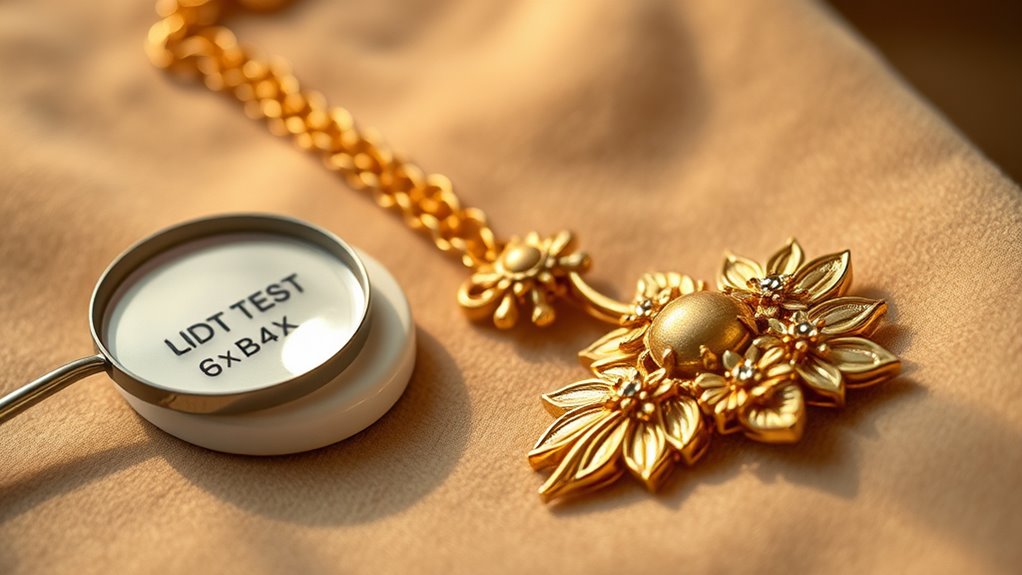
How to Determine If Trifari Jewelry Is Real Gold
You can determine if your Trifari jewelry is real gold by checking for hallmarks like “14K,” “18K,” or “Sterling.” These marks indicate the presence of genuine precious metals.
Most Trifari pieces made after 1947 utilize gold-plated alloys, such as Trifanium, which means solid gold is quite rare.
To verify authenticity, look for “KTF” or patent marks. These can help you confirm whether your jewelry is indeed genuine.
While simple tests and visual inspections can provide insight, understanding the materials and learning how to spot real gold in detail can be beneficial.
So, keep exploring these key tips to get a better grasp on your jewelry’s authenticity!
Overview of Trifari Jewelry Materials

Although many people assume Trifari jewelry is solid gold, most pieces made after 1947 actually use alloys like Trifanium.
These items are typically gold-plated or gold-tone rather than pure gold.
When you look at Trifari items from this period, you’ll often find a gold tone finish that mimics the look of real gold but lacks its intrinsic value.
Earlier pieces, especially those made before 1947, sometimes include genuine gold or sterling silver.
You can often identify these earlier pieces by stamps like “14K,” “18K,” or “Sterling.”
If you want to verify authenticity, check for these hallmark stamps.
Since most mid-20th-century and modern Trifari jewelry relies on gold-tone metals and plating, it’s important not to assume the material is solid gold just by its appearance.
Historical Use of Gold in Trifari Pieces

Understanding the historical use of gold in Trifari jewelry helps clarify why many pieces don’t contain solid gold.
Early Trifari pieces, especially those made before 1947, often featured genuine gold, marked with hallmarks like “14K” or “18K.”
After 1947, the company shifted to gold-plated and alloy materials, making solid gold rare in later designs.
To spot authentic gold Trifari, check for hallmark stamps.
| Period | Material Used |
|---|---|
| 1904–1946 | Genuine gold |
| 1904–1946 | High-quality gold |
| Post-1947 | Gold-plated alloys |
| Post-1947 | Trifanium alloy |
| Modern pieces | Gold-tone plating |
This timeline helps you understand why most Trifari jewelry you see today isn’t solid gold.
Understanding the Trifanium Alloy

You’ll want to recognize that Trifanium is a durable, tarnish-resistant alloy often used as the base metal in Trifari jewelry.
While it usually has a silver color, you’ll notice many pieces are gold-plated to achieve a richer look.
Understanding these details helps you identify whether your Trifari piece contains real gold or just a plated finish.
Trifanium Composition Details
Since Trifanium was developed by Trifari in 1947, it’s become a key base metal for many of their jewelry pieces.
This proprietary alloy forms the foundation of much of their mid-century costume jewelry.
Trifanium is a silver-colored alloy known for its durability and excellent tarnish resistance, which helps maintain the look of your jewelry over time.
Typically, Trifanium pieces are coated with gold plating or rhodium to give them a rich, attractive finish without using solid gold.
When you examine Trifari jewelry, it’s essential to understand that Trifanium itself contains no real gold unless marked.
This alloy’s composition ensures your pieces are both long-lasting and visually appealing, making it a staple in Trifari’s design and production.
Tarnish Resistance Properties
Although many costume jewelry metals tarnish quickly, Trifarium stands out for its impressive resistance to corrosion and discoloration.
This alloy, used by Trifari since the 1950s, features a non-tarnishing base metal that maintains your jewelry’s shine over time.
When evaluating tarnish resistance, consider these key points:
- Trifanium’s unique composition prevents common tarnishing issues.
- Gold or rhodium plating further enhances tarnish resistance and appearance.
- Authentic Trifari pieces show minimal dulling or discoloration, even after years.
- Tarnish resistance helps you distinguish genuine Trifari from other costume jewelry.
Understanding these properties ensures you recognize the durable, high-quality finish that sets Trifari jewelry apart in the world of costume pieces.
Gold Plating Usage
When you examine Trifari jewelry made after 1947, you’ll notice most pieces use a patented alloy called Trifanium as their base metal.
This non-tarnishing silver-colored alloy replaced solid gold, serving as the foundation for many pieces.
To achieve a luxurious look, Trifanium was often coated with gold plating.
This gives the appearance of real gold without the expense.
Understanding gold plating usage is key to distinguishing genuine gold from costume jewelry.
Since Trifanium doesn’t contain real gold, the gold plating is purely cosmetic and can wear off over time.
So, when evaluating Trifari jewelry, look closely for signs of gold plating rather than solid gold, especially on pieces made after 1947.
This will help you accurately determine their composition and value.
Identifying Gold Hallmarks on Trifari Jewelry
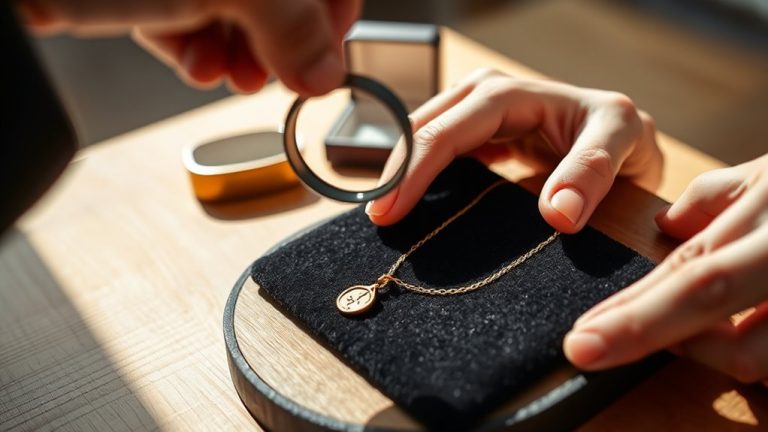
To spot real gold on your Trifari pieces, start by checking for common hallmarks like “14K,” “18K,” or “Sterling.”
Pay attention to date range indicators, such as the crown over the “T” logo, which helps identify the production era.
These marks are key to verifying authenticity before you invest in expert appraisals or further testing.
Common Gold Hallmarks
If you want to determine whether your Trifari jewelry contains real gold, identifying common gold hallmarks is essential.
Hallmarks are small stamps that indicate metal content and authenticity. Here are four key hallmarks to look for on Trifari pieces:
- “Sterling” and “Trifari Pat. Pending” — Found on pre-1947 pieces, indicating silver with possible gold accents.
- Crown over “T” logo — Used after 1955, sometimes with a copyright symbol or “TM.”
- “14K” or “14K GF” — Signifies real solid gold or gold-filled material.
- “KTF” mark — From the 1930s to early 1950s, linked to Giovanni Trifari’s original company.
Date Range Indicators
Although Trifari has produced jewelry for many decades, recognizing date range indicators on their gold hallmarks helps you determine whether a piece contains genuine gold or is simply gold-plated.
For example, pieces made before 1947 often carry clear gold stamps like “14K” or “18K,” signaling solid gold content.
You’ll also notice accompanying marks, such as the crown over the T or “Trifari” in script, which serve as date range indicators and help pinpoint the era of production.
After the 1950s, Trifari shifted to gold-tone plating and alloys like Trifanium, which usually lack genuine gold hallmarks.
Authenticity Verification Marks
Understanding date range indicators sets the stage for recognizing the authenticity verification marks that confirm whether your Trifari jewelry contains real gold.
Hallmarks are your best clues to verify gold content.
1. Look for “14K,” “18K,” or the word “Gold” stamped near the Trifari logo, especially on pieces made before 1947.
2. Check for assay office hallmarks on vintage items; these can be cross-referenced for added verification.
3. Post-1947 Trifari jewelry rarely has gold hallmarks.
Often, it’s marked with “Trifari” and a crown or “Pat. Pending,” indicating plated or alloy metals.
4. Sterling silver pieces will feature “Sterling” or “Sterling Silver” stamps, sometimes alongside Trifari marks.
This confirms material authenticity.
Testing Methods for Verifying Gold Content
When you want to verify whether your Trifari jewelry is real gold, several reliable testing methods can help.
Start by using a gold testing kit with acid solutions designed for specific karats. If your jewelry doesn’t react to the acid, it likely contains genuine gold.
You can also perform a simple magnet test—true gold isn’t magnetic. So, if your piece sticks to a magnet, it’s probably not real gold.
Look closely for hallmark stamps like “14K,” “18K,” or “GOLD” engraved on the jewelry, which indicate authenticity.
For more precise results, consider having a professional jeweler conduct ultrasonic or X-ray fluorescence (XRF) tests.
Finally, examine the jewelry’s color and weight—real gold has a consistent hue and feels heavier than plated or costume pieces.
Distinguishing Gold-Plated and Gold-Filled Trifari Items
Knowing how to test for real gold helps, but distinguishing between gold-plated and gold-filled Trifari pieces requires attention to specific markings and construction.
Here’s how you can tell them apart:
- Look for stamps like “G.P.” or “Gold Plated” indicating a thin gold layer over base metal.
- Check for “GF” or “Gold Filled” marks, showing a thicker layer of gold bonded to the base metal.
- Understand that gold-filled pieces have at least 1/20th gold by weight, making them more durable than gold-plated ones.
- Remember, gold-plated markings may fade over time.
Common Imitation Materials in Trifari Jewelry
Although Trifari jewelry often looks luxurious, much of it isn’t made from genuine gold.
Instead, it’s crafted from alloy metals like Trifanium, coated with gold-tone or silver-tone finishes.
You’ll find many pieces featuring imitation materials such as faux pearls, which have an iridescent shine derived from oyster shells.
Besides faux pearls, Trifari frequently used rhinestones, Lucite, and pressed glass to mimic precious gemstones.
They even trademarked synthetic stones like Triamond, a simulated diamond.
Most Trifari items rely on potmetal or base metals plated with gold or silver tones rather than solid gold.
Knowing these common imitation materials helps you better assess whether a piece contains real gold or is mainly decorative.
This knowledge allows you to make informed decisions when evaluating or purchasing Trifari jewelry.
Significance of Trifari Marks and Signatures
Identifying the marks and signatures on Trifari jewelry can tell you a lot about its origin and authenticity.
You’ll want to carefully examine each piece for these key signs:
- Look for stamps like “KTF,” “Trifari,” or the crown over the “T.” These stamps can date pieces and confirm genuine manufacture.
- Check for “Pat. Pending” or patent numbers—these indicate authentic Trifari from the 1940s onward.
- Sterling silver items should say “Sterling” and may include the logo. This assures you of the material.
- Beware of unmarked or oddly marked pieces, as they might be reproductions or fakes.
Keep in mind, signs of wear can sometimes obscure marks.
When to Seek Professional Appraisal
If you’re uncertain about your Trifari jewelry’s gold content or authenticity, it’s wise to consult a professional appraiser.
They can provide a clear and reliable assessment.
A professional appraiser uses methods like acid testing, X-ray fluorescence, and hallmark examination to confirm if your piece contains real gold.
You should especially seek an appraisal for high-value, vintage, or gold-stamped items, where authenticity markedly impacts value.
An expert will also evaluate the metal’s purity, craftsmanship, and provenance, which are essential for accurate valuation.
Always choose a reputable, certified professional appraiser or gemologist to ensure an unbiased and precise assessment.
Trusting their expertise will help you confidently determine whether your Trifari jewelry is genuine gold.
Frequently Asked Questions
How to Tell if Trifari Jewelry Is Real?
You can tell if Trifari jewelry is real by checking for hallmarks like “14K.”
Weighing it and noting its color can also provide clues.
If you’re still unsure, it’s a good idea to get it tested by a jeweler.
Alternatively, you can use an acid test kit for confirmation.
Is Trifari Jewelry Real Gold Worth?
Trifari jewelry isn’t usually real gold, so it’s generally not worth much as gold.
You’ll find value mostly in vintage pieces or rare designs.
But don’t expect solid gold prices unless it’s marked and verified.
Does Trifari Make Real Gold Jewelry?
Trifari rarely makes real gold jewelry nowadays.
If you spot a piece marked with gold karat stamps like “14K” or “18K,” especially from before 1947, it’s likely genuine gold.
Otherwise, it’s mostly plated or alloy.
What Is the Easiest Way to Tell if Gold Is Real?
Picture holding warm gold that shines without fading—that’s real gold.
The easiest way to tell? Use a gold testing kit; it reacts with acid to reveal authenticity quickly, saving you time and doubt.
Conclusion
Think of your Trifari jewelry as a secret garden—its true value hidden beneath layers of leaves and blossoms.
By learning to read its marks and testing its gold, you’re opening the gate to authenticity.
Don’t let surface shine fool you; real gold stands firm like ancient roots.
When in doubt, call in a gardener—a professional appraiser—to help you nurture and protect what’s truly precious.
Your discovery is the key to lasting beauty.
In conclusion, understanding the marks and testing the gold in your Trifari jewelry is essential for determining its authenticity.
Don’t overlook the importance of getting a professional opinion if you’re unsure.
Real gold can elevate your pieces and enhance their value, so take the time to explore what you own.
With the right knowledge and resources, you can appreciate the true worth of your Trifari treasures.