Why Does Brass Jewelry Turn Green?
Brass jewelry turns green due to the presence of copper, which is a key element in its composition. When exposed to moisture, sweat, and various chemicals found on your skin or in the air, copper reacts and forms green copper salts.
This process is a harmless oxidation and results in the green tint that can appear on both the jewelry and your skin.
Factors like humidity, physical exercise, and even lotions can speed up this reaction.
But don’t worry, there are ways to prevent it! With careful handling, protective coatings, and proper cleaning, you can keep your brass jewelry looking beautiful.
If you’re curious about how to avoid or fix those pesky green stains, there’s plenty more to learn about caring for brass!
Understanding Brass Composition and Tarnishing

Because brass is mainly made of copper and zinc, its tendency to tarnish comes from how copper reacts with oxygen, moisture, and acids.
Brass tarnishes primarily due to copper reacting with oxygen, moisture, and acids.
When you wear brass jewelry, the copper in this alloy undergoes oxidation, a natural chemical reaction that gradually changes the metal’s surface.
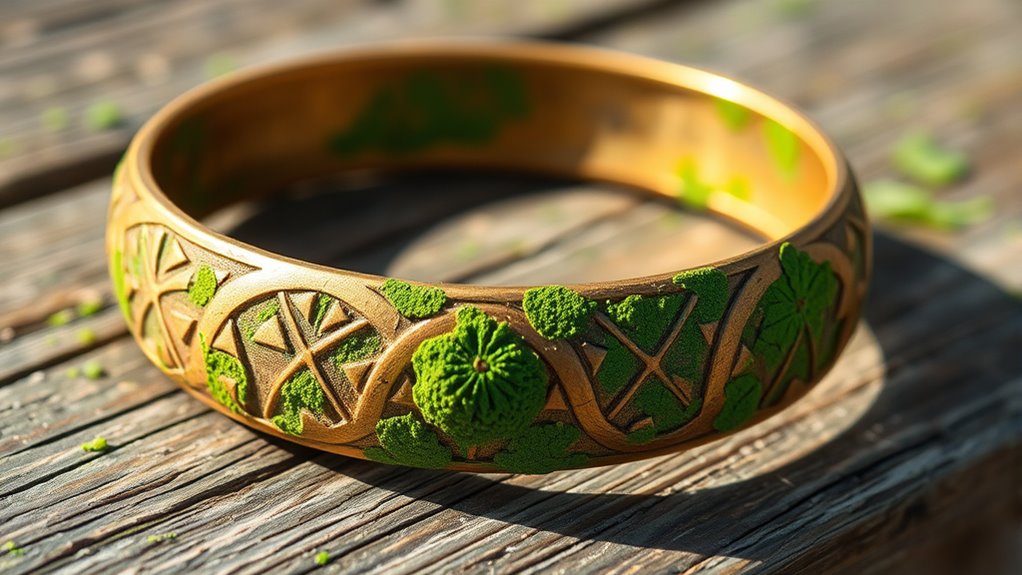
This process creates a green patina, which you’ll notice as a greenish tint on your jewelry.
The green color forms due to copper salts like copper carbonate developing on the surface.
Tarnishing doesn’t harm the brass itself, but it does alter its appearance.
The zinc in brass helps give it strength and color, but it’s the copper that mainly drives this surface change.
Environmental factors like humidity and skin contact speed up tarnishing, so understanding brass’s composition helps you care for your jewelry better.
The Chemistry Behind Brass Turning Skin Green

When you wear brass jewelry, copper in the alloy reacts with oxygen, moisture, and your skin’s acids, causing it to oxidize.
This oxidation forms copper salts that transfer a harmless green stain onto your skin.
Understanding this chemical reaction helps explain why your skin changes color without damaging the jewelry.
Copper Oxidation Process
If you wear brass jewelry regularly, you’ve probably noticed it sometimes turns your skin green.
This happens because of the copper oxidation process involving the copper in brass.
When your jewelry encounters moisture and environmental exposure—like air, humidity, or chemicals from lotions—copper reacts with oxygen and water.
This reaction forms copper oxide, leading to tarnishing and green discoloration.
Over time, copper salts such as copper carbonate, sulfate, and chloride develop on the surface, creating that familiar green patina.
Skin oils and sweat, which contain acids and salts, speed up this process.
Although the green discoloration may be unwanted, it’s a natural chemical reaction that doesn’t harm the brass or your skin.
Understanding this helps explain why your favorite brass pieces change color with wear.
Skin Reaction Chemistry
Although brass jewelry looks beautiful, the copper in it reacts with your skin’s moisture, sweat, and oils. This reaction causes a chemical change that leaves green stains.
This copper reaction produces copper salts through oxidation, leading to skin discoloration. The green stains aren’t an allergy but a result of metal corrosion depositing copper compounds on your skin.
Factors like water, perfumes, and lotions speed up this process, similar to the tarnishing you see on old pennies.
- Copper oxidizes when exposed to air and skin acids.
- Sweat and oils form green copper salts like carbonate and sulfate.
- Deposited copper salts cause visible skin discoloration.
- Environmental pollutants accelerate metal corrosion.
- The reaction is a harmless natural tarnishing process.
Understanding this chemistry helps you manage and prevent unwanted green stains.
Environmental Factors That Accelerate Tarnishing

Since brass jewelry contains copper, it reacts quickly to environmental factors like humidity, moisture, and pollutants, which speed up tarnishing.
Oxidation occurs faster when you expose your brass pieces to high moisture levels or wear them while swimming or showering.
Brass jewelry tarnishes more quickly with high moisture exposure or use during swimming and showering.
Skin oils and sweat introduce acids and salts that also promote corrosion on copper alloys.
Air pollution and other contaminants in the environment further accelerate discoloration by reacting chemically with the metal surface.
Even everyday products like perfumes, lotions, and cleaning agents can increase the speed of tarnishing.
To keep your brass jewelry looking its best, minimize environmental exposure and wipe off any moisture or residues after wearing.
Understanding these factors helps you prevent the green patina caused by accelerated oxidation and maintain your jewelry’s shine longer.
Common Misconceptions About Brass and Skin Reactions
While wearing brass jewelry, you might notice green marks on your skin and worry about an allergic reaction.
However, this green skin is usually caused by oxidation of the alloy of copper in brass jewelry, not an allergy.
Many misconceptions surround this harmless reaction:
- Green staining isn’t harmful or toxic to your skin.
- Brass jewelry doesn’t necessarily cause irritation or burns.
- The green marks result from copper oxidation, a natural process.
- Both low and high-quality brass can cause green staining.
- Removing green skin doesn’t require medical treatment—washing with soap and water works.
Understanding these facts helps you avoid unnecessary concern.
The green discoloration is simply a surface chemical reaction, not a sign of skin damage or allergy.
How Sweat and Skin Acidity Influence Greening
When you wear brass jewelry, your sweat plays a key role in causing it to turn green by reacting with the copper in the metal.
Sweat contains salts and acids that speed up oxidation, leading to green discoloration. Your skin acidity also matters—people with more acidic skin experience faster tarnishing and greening because acids enhance the reaction with copper.
Moisture from sweat and the surrounding environment increases this effect, accelerating the formation of copper salts.
These copper salts then deposit on both the jewelry and your skin, creating noticeable green stains.
Over time, prolonged contact with sweat-rich skin causes a buildup of these compounds, intensifying the green discoloration you see on your brass pieces.
Understanding this interaction helps explain why your brass jewelry changes color when worn.
Preventative Measures to Avoid Green Stains
To keep your brass jewelry from turning green, start by applying a thin layer of clear nail polish to create a protective barrier.
You’ll also want to avoid moisture and chemicals by removing your jewelry before swimming or using lotions.
Storing pieces in airtight containers further helps prevent exposure that leads to tarnishing.
Protective Coatings Application
Since brass jewelry often causes green stains due to skin contact with reactive metals like copper, applying a clear protective coating can effectively prevent this issue.
You can use clear nail polish or a specialized jewelry sealant to create a barrier that blocks oxidation and tarnishing. This protective coating reduces skin discoloration by preventing direct metal contact.
Remember to clean and dry your jewelry thoroughly before application to guarantee the coating adheres well. Over time, the barrier wears off, so regular reapplication keeps your jewelry stain-free.
- Use clear nail polish or commercial jewelry sealants like Renaissance wax.
- Apply only on clean, dry surfaces for better adhesion.
- Protective coatings don’t change your jewelry’s look or weight.
- Reapply periodically to maintain protection against oxidation.
- Helps avoid green stains caused by skin contact and tarnishing.
Moisture and Chemical Avoidance
Although brass jewelry adds a stylish touch, exposure to moisture and chemicals accelerates green staining by triggering oxidation.
To prevent green stains, remove water, sweat, and lotions from your jewelry promptly. These factors promote chemical reactions with skin acids that cause tarnish.
Applying a clear sealant or nail polish on inner surfaces creates a barrier against moisture and skin acids. This can significantly reduce oxidation.
Also, it’s best to avoid wearing brass jewelry while swimming, bathing, or during heavy sweating. This helps limit exposure to humidity and moisture.
When it comes to storage, keep your pieces in dry, airtight containers with anti-tarnish strips. This minimizes contact with air pollutants and humidity.
Lastly, regularly clean your jewelry with a soft cloth to remove residues that react with moisture. This simple step helps you maintain its shine and avoid green discoloration.
Effective Cleaning Techniques for Tarnished Brass
When your brass jewelry starts turning green, you’ll want to clean it carefully to restore its original shine without causing damage.
Effective brass cleaning targets oxidation and green stain buildup, ensuring proper tarnish removal while preserving your piece.
Try natural cleaning methods first to avoid harsh chemicals.
Here’s how you can care for your jewelry:
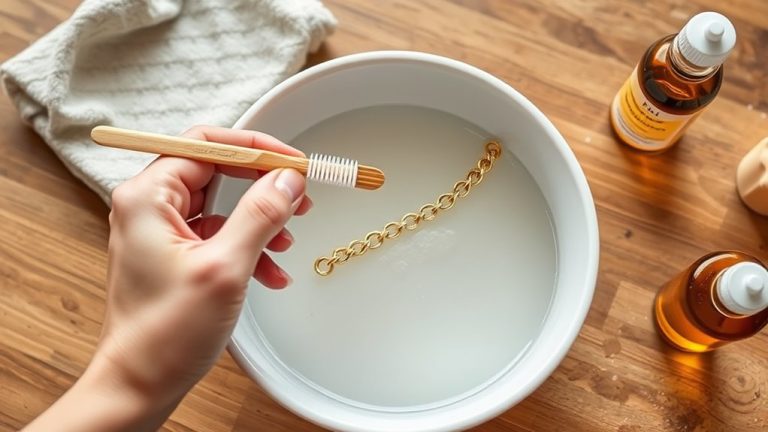
- Gently wipe with a soft polishing cloth or microfiber towel to remove surface dirt.
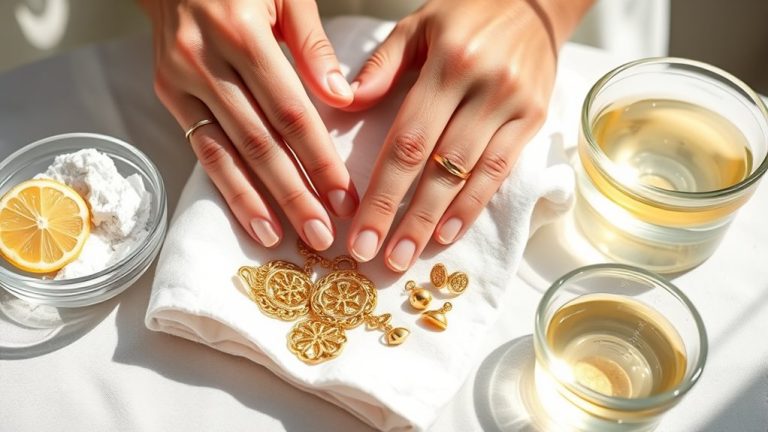
- Use a homemade mix of lemon juice and baking soda or vinegar, salt, and flour for soaking or rubbing.
- Apply a brass-specific polish like Brasso according to instructions for stubborn tarnish.
- Rinse thoroughly with warm water and dry completely to prevent water spots.
- Store in airtight containers with anti-tarnish strips to slow oxidation.
These steps keep your brass jewelry shining and protect it from further green staining.
Comparing Brass to Other Jewelry Metals
Cleaning your brass jewelry helps maintain its shine, but understanding how it compares to other metals can guide you in choosing the right pieces.
Brass, an alloy of copper and zinc, is more prone to oxidation than metals like stainless steel or platinum, which resist tarnishing.
When exposed to moisture and air, brass develops a green patina due to copper oxidation, something you rarely see with gold or silver jewelry.
Gold, especially 14K or higher, contains fewer reactive metals, so it seldom causes skin discoloration.
While brass is more affordable and easier to work with, its tendency to tarnish faster than titanium or platinum means you might need to clean it more often.
Knowing these differences helps you pick metals that suit your style and maintenance preferences.
Long-Term Care and Maintenance Tips for Brass Jewelry
To keep your brass jewelry looking its best over time, you should regularly remove oils and residues that speed up tarnishing by gently wiping it with a soft cloth or mild soap.
Proper maintenance helps prevent oxidation and minimizes skin reactions caused by tarnished brass jewelry.
Here are key long-term care tips:
- Store brass jewelry in airtight containers or anti-tarnish pouches to reduce moisture exposure.
- Avoid wearing it while swimming, showering, or exercising to limit contact with water and sweat.
- Apply a thin layer of clear nail polish or jewelry sealant as a protective coating on contact surfaces.
- Periodically polish with commercial brass cleaner or a lemon-baking soda paste.
- Consistent cleaning and protective care reduce green discoloration and extend your jewelry’s life.
Taking these steps can really help your brass pieces shine for years to come!
Frequently Asked Questions
How to Keep Brass Jewelry From Turning Skin Green?
You can keep brass jewelry from turning your skin green by applying clear nail polish inside.
Be sure to remove it before exposure to moisture.
Also, store it in a dry place with anti-tarnish strips to help protect it.
Cleaning should be done gently to avoid damaging the finish.
And don’t forget to choose quality, nickel-free pieces for added safety!
How to Get Rid of Green Tarnish on Brass?
You can get rid of green tarnish on brass by scrubbing with a lemon juice and baking soda paste.
Alternatively, you can use commercial brass polish.
Another option is soaking it briefly in vinegar or ketchup.
Just remember to always rinse and dry thoroughly afterward.
Does Real Brass Turn Green?
Yes, real brass does turn green over time.
You’ll notice it when copper in the alloy reacts with moisture and air, forming a green patina.
Proper care slows this, but it’s a natural process you can’t fully avoid.
How to Stop Brass Jewelry From Tarnishing?
Think of your brass jewelry as a delicate garden.
Seal it with clear nail polish, store it airtight, clean gently, and avoid water or chemicals.
These steps protect it from tarnish, keeping its shine like fresh blossoms.
Conclusion
Now that you know why brass jewelry turns green, you can take simple steps to protect your favorite pieces.
For example, imagine Sarah, who noticed green stains after a summer hike.
By wiping her brass bracelet after sweating and storing it in a dry place, she stopped the discoloration.
With a bit of care and cleaning, you can keep your brass jewelry shining without the green.
It’s all about being proactive!
Regular maintenance can go a long way in preserving the beauty of your brass pieces.
So, remember to clean your jewelry after wearing it and store it properly to enjoy its luster for years to come.
Taking these simple steps will help you prevent that unwanted green tarnish and keep your brass jewelry looking its best!