How to Clean Jewelry With Hydrogen Peroxide Safely
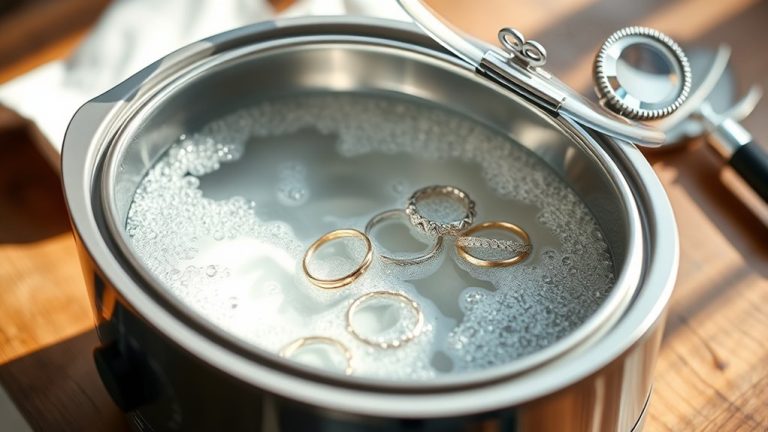
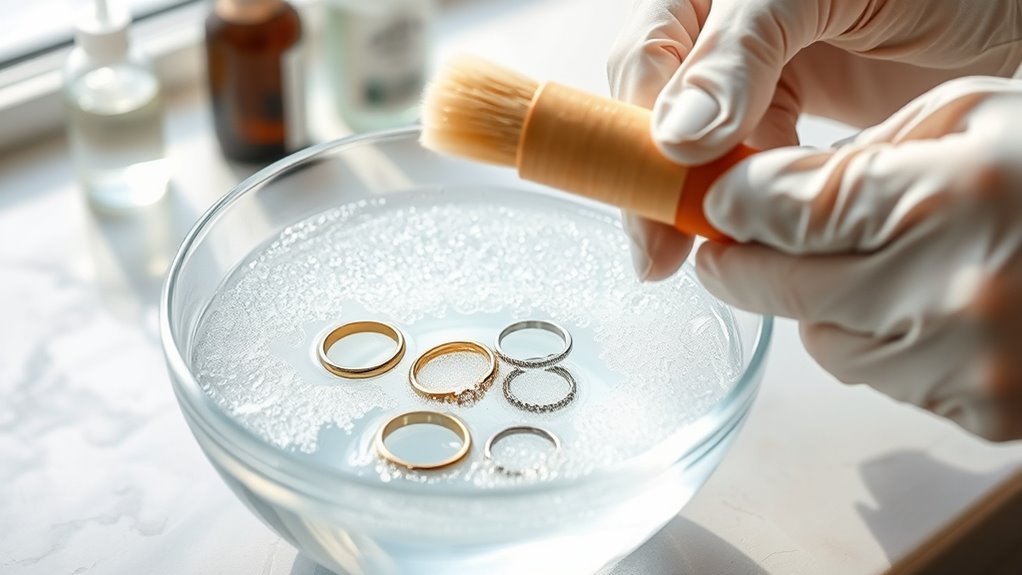
To clean your jewelry safely with hydrogen peroxide, you can follow a few simple steps. First, dilute the hydrogen peroxide at a 1:1 ratio with water, and then add a few drops of mild dish soap.
Now, for durable pieces like gold or diamonds, soak them briefly—around 1-2 minutes.
After soaking, gently brush the jewelry with a soft toothbrush to remove any grime.
Make sure to rinse thoroughly and dry with a soft cloth to avoid spots.
However, be cautious—avoid cleaning pearls and porous stones, as they can be damaged by this method.
By taking these steps, you can effectively protect your jewelry’s shine.
And there’s definitely more to know about how to handle different materials carefully!
Understanding Hydrogen Peroxide

Although hydrogen peroxide (H₂O₂) might seem like just a common household chemical, it plays an essential role in cleaning jewelry by breaking down into water and oxygen when it contacts organic material.
Hydrogen peroxide cleans jewelry by decomposing into water and oxygen upon contact with organic materials.
As a powerful oxidizer, hydrogen peroxide releases oxygen bubbles that lift dirt, grime, and bacteria from your jewelry’s surface.
This makes it an effective disinfectant, ensuring your pieces are not just shiny but also hygienic.
When it comes to tarnish removal, hydrogen peroxide oxidizes the metal’s surface, helping restore its original luster.
Household hydrogen peroxide typically contains 3% to 6% concentration, which is safe for general cleaning jewelry tasks.
However, you should be cautious since its reactive nature can damage certain materials if used improperly.
Jewelry Types Suitable for Hydrogen Peroxide Cleaning

You can safely use hydrogen peroxide to clean jewelry made from durable metals like gold, silver, platinum, and stainless steel.
It’s also effective on pieces with hard gemstones such as diamonds, sapphires, and rubies.
However, avoid using it on soft or porous stones like pearls, opals, turquoise, and emeralds to prevent damage.
Compatible Metals Only
Which types of jewelry can you safely clean with hydrogen peroxide?
You can confidently use it on durable metals like platinum, gold, silver, and stainless steel.
These metals resist corrosion and won’t be harmed by hydrogen peroxide’s mild oxidizing action.
To keep your cleaning safe, focus on:
- Platinum pieces—resilient and ideal for peroxide cleaning.
- Gold jewelry—both yellow and white gold work well.
- Silver items—great candidates, but watch for oxidized finishes.
- Stainless steel—durable and peroxide-friendly.
Avoid using hydrogen peroxide on jewelry with delicate finishes or glued parts, as it might damage them.
Always verify the metal type before cleaning to protect your valuable pieces.
Stick to these compatible metals to keep your jewelry sparkling safely.
Hard Gemstones Safe
When cleaning jewelry, hard gemstones like diamonds, sapphires, and rubies stand up well to hydrogen peroxide because of their toughness.
You can safely clean these durable gemstones with diluted hydrogen peroxide to disinfect and remove organic dirt without damage.
For effective jewelry care, limit soaking time and always rinse thoroughly afterward.
| Gemstone | Hardness Level | Safe with H₂O₂? |
|---|---|---|
| Diamond | 10 | Yes |
| Sapphire | 9 | Yes |
| Ruby | 9 | Yes |
| Emerald | 7.5 – 8 | No |
| Pearl | 2.5 – 4 | No |
Stick to hard gemstones for safe cleaning with hydrogen peroxide to keep your pieces sparkling.
Avoid Soft Stones
Why should you avoid using hydrogen peroxide on soft stones like pearls, opals, turquoise, or emeralds?
Soft gemstones are porous and sensitive, so hydrogen peroxide’s oxidative nature can cause serious damage.
When cleaning jewelry, maintaining gemstone safety is vital. Here’s why you should skip hydrogen peroxide for soft stones:
- It can cause discoloration and fading.
- The stone’s structure may weaken or etch.
- Luster loss is common with harsh chemicals.
- Gentle cleaning with jewelry-specific solutions or warm water is safer.
To protect your soft gemstones during jewelry cleaning, always verify compatibility first.
Stick to gentle cleaning methods to preserve your stones’ beauty without risking irreversible harm from hydrogen peroxide.
Preparing Hydrogen Peroxide Solution for Cleaning

Before using hydrogen peroxide to clean your jewelry, you’ll need to dilute it with water.
Typically, a 1:1 ratio works best to prevent damage or discoloration.
Always prepare the diluted solution in a clean glass or plastic container, never metal.
Using undiluted hydrogen peroxide can harm your jewelry’s finish.
Make a fresh solution each time to keep it effective, and clearly label the container to avoid confusion.
When cleaning jewelry, a soft toothbrush works well with this gentle mixture to remove dirt without scratching.
| Step | Container Type | Ratio |
|---|---|---|
| Prepare solution | Glass or Plastic | 1 part peroxide : 1 part water |
| Avoid | Metal or reactive | Undiluted peroxide not recommended |
| Label & refresh | Fresh each use | Properly labeled container |
Step-By-Step Guide to Cleaning Jewelry With Hydrogen Peroxide
First, you’ll want to prepare a diluted hydrogen peroxide solution to protect your jewelry.
Next, check if your pieces can safely handle this cleaning method, especially delicate gemstones.
Finally, follow a gentle cleaning and thorough rinsing process to restore your jewelry’s shine without causing damage.
Preparing the Cleaning Solution
When you prepare the cleaning solution, dilute hydrogen peroxide with an equal amount of water to make it gentler on your jewelry.
This helps prevent damage while soaking jewelry. To create an effective and safe cleaning solution, follow these steps:
- Pour equal parts hydrogen peroxide and water into a clean, shallow container.
- Add a few drops of mild dish soap to enhance the cleaning power without harsh chemicals.
- Mix gently to combine the diluted peroxide and soap evenly.
- Ensure the solution is at room temperature and free from any debris before soaking jewelry.
This careful preparation of your cleaning solution guarantees effective cleaning while protecting your precious pieces.
Jewelry Compatibility Check
How do you know if hydrogen peroxide is safe for your jewelry?
Start by identifying your jewelry materials and gemstones.
This jewelry identification step guarantees you avoid damage to delicate or porous stones like pearls, opals, turquoise, and emeralds, which hydrogen peroxide can harm.
For gemstone safety, dilute hydrogen peroxide with water—usually a 1:1 ratio—to minimize corrosion or discoloration risks.
Before fully cleaning, perform a patch test on a small, hidden area of your piece to check for any adverse reactions.
If you’re unsure about your jewelry’s composition or how to proceed, consult a jeweler.
Taking these precautions helps protect your jewelry and keeps it sparkling without causing unintended damage.
Cleaning and Rinsing Process
After confirming your jewelry’s compatibility with hydrogen peroxide, you can move on to the cleaning and rinsing steps.
Start by preparing a diluted solution, mixing hydrogen peroxide and water in a 1:1 ratio to prevent damage.
Follow these steps carefully:
- Soak your jewelry briefly in the diluted solution for a few minutes, adjusting time based on the material and dirt level.
- Use a soft-bristled toothbrush or soft cloth to gently scrub the pieces, focusing on crevices and detailed areas.
- Rinse your jewelry thoroughly with clean, lukewarm water to complete the rinsing process and remove any residue.
- Dry the jewelry carefully using a soft cloth to avoid water spots and moisture in small settings.
This method ensures safe, effective cleaning without harming your treasured pieces.
Precautions When Using Hydrogen Peroxide on Jewelry
Since hydrogen peroxide can be harsh on certain materials, you should always dilute it with water before applying it to your jewelry to prevent damage.
Before fully cleaning, test the diluted solution on a small, hidden area to spot any adverse reactions or discoloration.
Avoid soaking delicate gemstones like pearls, opals, or turquoise, as hydrogen peroxide can harm them.
If you do soak your jewelry, limit the time to 1-2 minutes to protect metal settings from weakening or etching.
When handling your pieces, wear gloves and use soft brushes to gently clean without scratching or causing physical damage.
Taking these precautions guarantees your jewelry stays safe and sparkling while effectively cleaned with hydrogen peroxide.
Potential Effects of Hydrogen Peroxide on Different Materials
Although hydrogen peroxide is a popular cleaning agent, you should be aware that it can cause oxidation and discoloration, especially on porous gemstones like pearls, opals, and turquoise.
When cleaning jewelry, keep in mind these potential effects of hydrogen peroxide on different materials:
- Porous gemstones risk discoloration and loss of luster due to oxidation.
- Metals such as silver and copper may experience accelerated metal tarnish.
- Concentrated hydrogen peroxide can pit or weaken soft metal settings like gold and silver.
- Delicate materials, including organic pearls and certain gemstones like emeralds, may suffer irreversible surface damage.
Always consider these effects before using hydrogen peroxide to avoid harming your valuable jewelry pieces.
Alternative Safe Methods for Jewelry Cleaning
When you want to clean your jewelry safely, opting for mild soap and warm water with a soft cloth or toothbrush works well.
This method doesn’t risk damage to delicate pieces, which is a big plus!
Alternative cleaning solutions designed for specific gemstones and metals offer another safe jewelry maintenance method.
You can also use polishing cloths to restore shine without harsh chemicals.
Ultrasonic cleaners provide a powerful option, but should be used cautiously.
It’s important to avoid fragile or porous stones to prevent damage.
Incorporating these jewelry cleaning hacks helps you maintain your pieces effectively at home.
Still, scheduling professional jewelry cleaning every 6 to 12 months guarantees a thorough, safe approach to preserving your jewelry’s brilliance.
Combining these techniques supports preventing damage to jewelry and keeps your collection looking its best.
Frequently Asked Questions
Is Hydrogen Peroxide Safe for Jewelry?
Hydrogen peroxide is safe for durable metals like gold and silver,
but can damage delicate stones and certain metals.
You should dilute it properly,
limit soaking time,
and consult a jeweler to avoid harming your jewelry.
Conclusion
Cleaning your jewelry with hydrogen peroxide is a simple, effective way to restore its shine without harsh chemicals.
You might worry it’ll damage delicate pieces, but when used properly and on the right materials, it’s safe and gentle.
Just follow the steps carefully, and you’ll avoid any harm while enjoying sparkling results.
Don’t let fear stop you—give your jewelry the care it deserves and watch it shine like new again!
In conclusion, using hydrogen peroxide to clean your jewelry can be a great choice for maintaining its beauty and luster.
By following the right techniques and knowing which materials are safe, you can achieve stunning results without the use of harsh chemicals.
So go ahead, embrace this easy cleaning method and let your jewelry dazzle and shine once more!