How Is a Jewelry Bail Used?
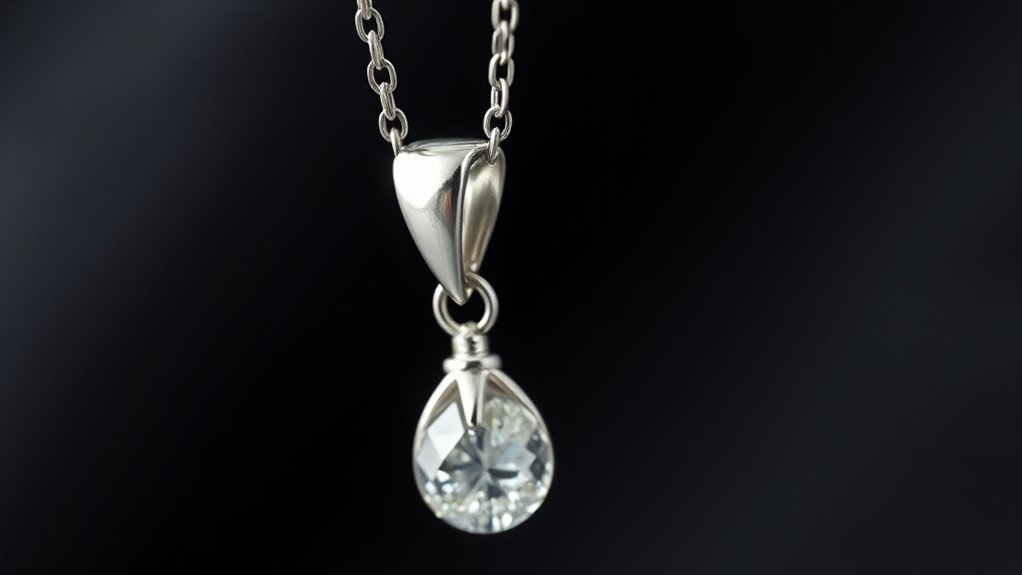
You use a jewelry bail to connect your pendant securely and stylishly to a chain or cord.
This ensures that it hangs straight and won’t slip or twist. Depending on your pendant’s design and weight, you might choose snap-on, glue-on, or pinch bails made from materials like sterling silver or gold.
Attaching methods vary—some bails clip on, while others require gluing or soldering in place.
It’s important to keep your bail well-maintained to ensure your jewelry stays both safe and attractive.
Exploring further reveals how to pick and care for the perfect bail.
The Purpose of Jewelry Bails

Although jewelry bails might seem like small components, they play a crucial role in connecting pendants to chains or cords.
Jewelry bails may be small, but they are essential for securely attaching pendants to chains or cords.
This allows your pendant to hang securely and attractively.
Bails serve both functional and aesthetic purposes in jewelry design.
They guarantee your pendant stays balanced and firmly attached, preventing it from slipping or twisting awkwardly.
At the same time, bails can enhance the overall look of your piece by complementing its style.
Whether they’re hidden behind the pendant or designed to be a visible feature, bails add to the jewelry’s appeal.
By choosing the right bail, you ensure your pendant hangs freely and looks its best.
This makes the entire jewelry piece more versatile and attractive.
Without bails, your pendant wouldn’t have the secure, elegant connection it needs.
Common Types of Bails and Their Uses

How do you choose the right bail for your pendant?
Knowing the common bail types helps.
Snap-on bails let you swap pendants easily without tools. This makes them perfect for versatility.
Glue-on bails attach permanently with adhesive. They’re ideal for flat-backed or irregular pieces.
If your pendant has a drilled hole, pinch bails grip securely without soldering.
Folding donut bails fit over small to medium donuts, enabling quick attachment and removal. This is great for changing looks in a jewelry set.
Metal bails, like split loop or hidden loop types, offer wide openings. This makes wire or jump ring attachment simple and seamless.
Each bail type serves a distinct purpose.
Selecting the Appropriate Bail for Your Pendant

When selecting a bail, make sure its size fits your pendant and allows your chain or cord to pass through smoothly.
It’s important that the bail’s material and style match your pendant’s weight and design for a balanced look.
Also, choose an attachment method that suits your jewelry-making style and guarantees durability.
Bail Size Matching
Selecting the right bail size is essential to guarantee your pendant hangs securely and looks balanced.
To match your bail size perfectly with your pendant and necklace design, follow these steps:
- Choose a bail with an internal diameter slightly larger than your chain or cord for smooth movement without strain.
- For small pendants (up to 10mm), pick bails with openings around 6-8mm to avoid excessive shifting.
- For pendants between 10-25mm, select bails with an 8-11mm interior diameter for proper support and aesthetic balance.
- Lastly, match the bail size to your pendant’s weight—heavier pieces need sturdier jewelry bails to prevent damage.
Always double-check the bail’s opening against your chain size to ensure a secure fit and flawless necklace design.
Material Compatibility
Although matching bail size is important, choosing a bail made from a material that complements your pendant and chain plays an equally crucial role in achieving a polished and durable look.
For sterling silver jewelry, select a sterling silver bail to maintain material compatibility and avoid tarnish.
The bail should be sturdy enough to support your pendant’s weight and resist corrosion for everyday wear.
| Pendant Material | Recommended Bail Material | Durability | Appearance Match | Notes |
|---|---|---|---|---|
| Sterling Silver | Sterling Silver | High | Seamless | Ideal for everyday use |
| Gold | Gold | High | Seamless | Matches gold tones |
| Gemstone | Sterling Silver or Gold | Medium to High | Depends on style | Choose based on pendant |
| Leather Cord | Durable Metal | High | Varies | Ensure bail fits cord |
| Costume Jewelry | Plated Metal | Medium | Depends on style | Consider coating quality |
Attachment Method Choices
Because your pendant’s design and material vary, you’ll want to pick a bail attachment method that guarantees both security and style.
The right bail ensures your pendant stays safely on the chain and suits the application perfectly.
Consider these options:
- Choose a soldered bail for heavy or valuable pendants needing permanent, secure attachment.
- Opt for a glue-on bail with fragile or irregular pieces that can’t handle soldering.
- Use a snap-on or hinged bail if you want easy pendant interchangeability without tools.
- Select a pinch or prong bail for drilled beads or cabochons, gripping firmly without adhesives.
Always match the bail size to your chain or cord diameter to allow smooth movement and a polished look.
Methods for Attaching Bails to Jewelry Pieces
When attaching bails to jewelry pieces, you have several effective methods to choose from depending on the desired strength and permanence.
You can solder bails to pendants for a permanent, sturdy connection.
Or, if you need a quicker, non-permanent fix, using jewelry adhesive is a great option.
Open-loop bails or jump rings can be threaded through drilled holes or loops on the pendant.
These are then connected to the chain or cord for a secure attachment.
Snap-on or hinged bails allow you to easily attach and remove pendants without tools, simply by clasping onto the chain.
Wire wrapping is another decorative method, where you twist wire around the pendant or bail to secure them together.
If you’re working with half-drilled beads or focal components, applying epoxy or Loctite glue to the bail’s attachment point before pressing it onto the piece will ensure a firm hold.
Materials and Finishes Used in Jewelry Bails
Choosing the right materials and finishes for jewelry bails markedly affects both their appearance and durability.
You’ll find bails made from various metals, each bringing unique qualities to your pieces. Here’s what to consider:
- Materials: Common metals include sterling silver, gold, brass, pewter, and stainless steel. Each offers different strengths and looks that can complement your design.
- Finishes: Options like polished, matte, antiqued, or textured surfaces can really help enhance your jewelry’s style.
- Decorative Details: Some bails feature filigree, engraving, or beaded accents. These little touches can add significant visual appeal.
- Glue-on Bails: These are designed with smooth, flat pads. This ensures strong adhesion when using jewelry adhesives.
Selecting the right combination of materials and finishes is crucial. It ensures your bail not only looks great but also fits securely and lasts long.
Styling Jewelry With Different Bail Designs
Although bails might seem like small components, the design you pick can completely transform your jewelry’s look.
Choosing from various bail designs—like snap-on, glue-on, or pinch bails—lets you tailor your jewelry styling to match your pendant’s shape, size, and overall vibe.
Decorative bails with intricate patterns or unique materials can become the centerpiece, adding flair and sophistication.
Mixing finishes such as sterling silver with gold-plated bails adds contrast, enhancing your style’s versatility.
| Bail Design | Best For | Styling Tip |
|---|---|---|
| Snap-on | Easy interchange | Great for multiple pendants |
| Glue-on | Delicate pieces | Adds a seamless look |
| Pinch Bail | Heavy pendants | Secure and sturdy styling |
| Decorative | Statement pieces | Focus on unique patterns |
| Mixed Finish | Versatile sets | Combine metals for contrast |
Maintaining and Repairing Jewelry Bails
You should regularly check your jewelry bails for any signs of damage or bending to keep them secure.
When needed, clean them gently with mild cleaners and reshape or replace damaged parts using jewelry pliers.
Proper care and timely repairs will help your pieces last longer and stay looking their best.
Bail Damage Inspection
When you regularly inspect your jewelry bail, you can catch signs of bending, cracking, or looseness before they lead to failure.
To effectively monitor bail damage, follow these steps:
- Examine the bail and its connection to the pendant or chain for any wear or pinching that might cause detachment.
- Use magnification tools to spot hairline fractures or weak metal spots that might be invisible to the naked eye.
- Check that closure mechanisms like hinges or split loops open and close smoothly, without any resistance or distortion.
- If you notice minor damage, address it quickly by gently reshaping bent bails with pliers, or consult a professional jeweler for assistance.
Bail Replacement Process
Regular inspections can reveal minor bail damage that might require replacement to keep your jewelry secure and looking its best.
When you decide to replace a bail, start by gently opening or detaching the existing one with pliers or carefully removing any glue or soldered connections.
Next, clean the pendant or chain attachment points by removing all adhesive or solder remnants to guarantee a smooth surface.
Choose a new bail that fits your pendant’s size and weight for proper support.
Attach the new bail by gluing it with jewelry adhesive, soldering, or connecting it with jump rings or wire, depending on the design.
Finally, inspect the attachment for stability to ensure your jewelry stays secure and free from damage.
Cleaning and Care
Although jewelry bails are small, they play a crucial role in securing your pendants and maintaining your jewelry’s overall appearance.
To keep them in top shape, you need to clean bails regularly and inspect them carefully.
Follow these steps:
- Gently clean bails with a soft cloth and mild soap, avoiding harsh chemicals that can damage your jewelry.
- Use a soft brush or jewelry-specific cleaner to remove dirt from intricate bail designs.
- Inspect jewelry bails frequently for any signs of bending, pinching, or wear to catch problems early.
- Repair or replace any damaged or loose bails promptly to ensure your pendant stays secure and your jewelry stays intact.
Frequently Asked Questions
How to Use a Bail in Jewelry?
You select the right bail,
gently open it with pliers,
slide your pendant inside,
then close it securely.
Finally, thread your chain through the bail loop to attach your pendant,
completing your jewelry piece effortlessly.
What Is the Bail on Jewelry?
Think of a bail as the jewelry’s handshake—it’s the small connector that links your pendant to a chain.
This ensures it hangs gracefully and securely, blending function with style to complete your piece’s story.
What Is a Bail When It Comes to Jewelry?
A bail in jewelry is the part that connects a pendant to a necklace or chain.
You’ll use it to hang pendants securely.
Choosing styles and materials that match your design is important to guarantee durability.
How to Open a Bail Necklace?
You gently use flat nose pliers to open the bail’s hinge or tension mechanism without bending it.
Hold it firmly, pry it open carefully, then insert or remove the chain before closing the bail securely.
Conclusion
Using a jewelry bail is like adding the perfect bridge that connects your pendant to a chain, making your piece complete and wearable.
By choosing the right type and attaching it carefully, you guarantee your jewelry not only looks stunning but stays secure.
Remember to take into account materials and design to match your style.
Also, keep your bails well-maintained to ensure your treasures shine bright for years to come.
In conclusion, the right jewelry bail is essential for both aesthetics and functionality. It enhances the beauty of your pendant while ensuring it is securely fastened to your chain.
With the right choice and proper care, your jewelry will not only look fabulous but also last through the years.
So, pay attention to the details and enjoy showcasing your unique style with confidence!