How to Care for Gold Plated Jewelry When It Gets Wet
If your gold plated jewelry gets wet, it’s important to act quickly. Remove it immediately and gently pat it dry with a soft, lint-free cloth—never rub or scrub.
Avoid harsh chemicals, as they can damage the finish. Make sure the jewelry is completely dry before storing it away.
To minimize exposure to water, it’s a good idea to remove your jewelry before swimming or showering.
Consider applying a protective sealant to help prolong its life.
Taking these quick and careful steps can help prevent tarnish and wear.
Want to keep your pieces sparkling longer? Keep exploring these care tips!
Understanding Gold Plated Jewelry

What makes gold plated jewelry different from solid gold?
Gold plated pieces have a thin layer of gold bonded to a base metal like brass or copper.
Gold plated jewelry features a thin gold layer fused to a base metal such as brass or copper.
This plating layer usually ranges from 0.5 to 2.5 microns thick, which affects how long your jewelry can maintain its shine.
Unlike solid gold, the metal underneath isn’t gold, so it’s more prone to damage and wear.
When you wear gold plated jewelry, you need to take extra care to protect that delicate gold layer.
Exposure to water, chemicals, or friction can wear down the plating, causing it to fade or tarnish.
To keep your jewelry looking its best, avoid rough use and handle it gently.
Proper care helps preserve the plating and keeps your pieces shining longer.
How Water Affects Gold Plated Jewelry

Although gold plated jewelry looks beautiful, water can quickly damage its delicate surface.
Water exposure causes gold plating to wear off faster, exposing the base metal beneath.
Prolonged contact leads to tarnish, corrosion, and accelerates oxidation, dulling your jewelry.
Saltwater and chlorine are especially harsh, causing discoloration and deterioration.
Understanding these effects helps you protect your pieces better.
| Water Type | Effect on Gold Plated Jewelry |
|---|---|
| Fresh Water | May cause tarnishing and wear off |
| Saltwater | Accelerates corrosion and tarnish |
| Chlorine | Causes rapid discoloration |
| Prolonged Moisture | Leads to oxidation and flaking |
Immediate Steps to Take When Jewelry Gets Wet

When your gold plated jewelry gets wet, you should immediately pat it dry with a soft, lint-free cloth. This helps prevent water from seeping into the delicate plating.
Make sure to avoid rubbing or scrubbing, as this can cause water damage by wearing down the gold layer. Instead, use a dry cloth to gently pat your jewelry dry, steering clear of harsh chemicals or abrasive cleaners.
If you’ve worn your jewelry during water exposure, take immediate care to dry it thoroughly before storing it.
Although waterproof jewelry options exist, gold plated pieces aren’t typically waterproof, so it’s best to remove them before swimming or showering.
Also, avoid drying your jewelry on clothing, which may transfer moisture or lint.
Quick, careful drying helps prevent tarnishing and extends the life of your gold plated jewelry.
Best Practices for Drying Gold Plated Jewelry
Because gold plated jewelry has a delicate surface, you should always pat it dry gently with a soft, lint-free cloth after exposure to water.
This gentle dry method helps absorb moisture without damaging the gold layer.
Avoid rubbing, which can wear down the plating.
Use a dry microfiber cloth to remove any residual moisture, especially from crevices and detailed areas.
For thorough drying, hold your jewelry in a well-ventilated spot until completely dry before storing or wearing.
Never air-dry it in humid environments or under direct sunlight, as excess moisture can accelerate tarnishing.
Cleaning Techniques for Wet Gold Plated Pieces
When your gold plated jewelry gets wet, you’ll want to clean it gently to protect the delicate layer.
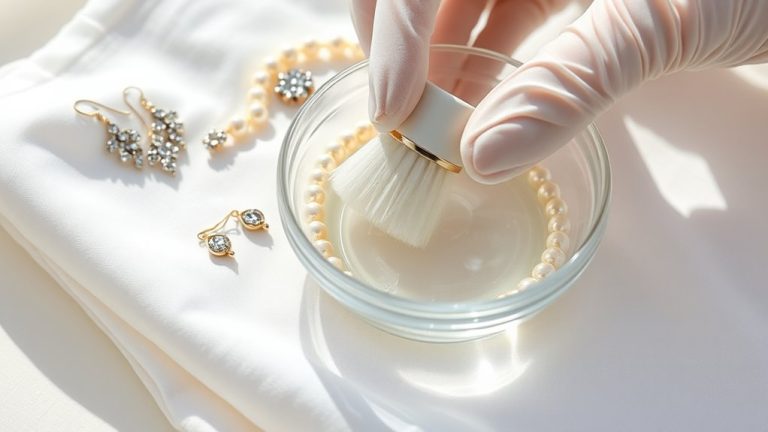
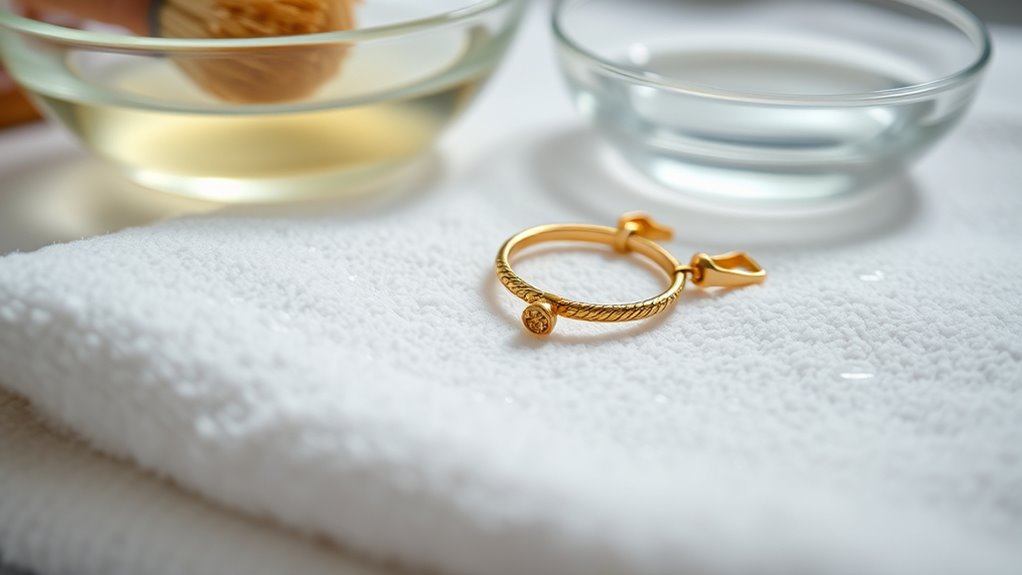
Use a mild soap with warm water and a soft cloth or brush to remove dirt without causing damage.
Always dry your pieces completely before storing to keep them looking their best.
Gentle Cleaning Methods
Although gold plated jewelry is delicate, you can safely clean it by using a soft, damp cloth with mild soap and water.
Avoid abrasive cleaners that can damage the gold layer.
Gently wipe the surface to remove dirt and residue without scrubbing.
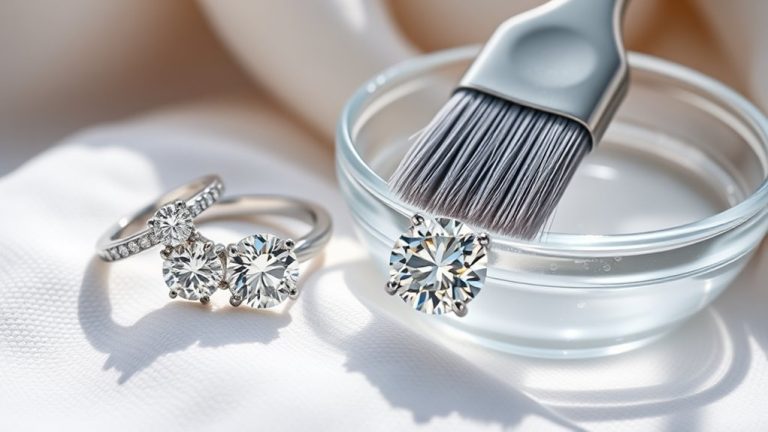
For crevices, use a soft-bristled toothbrush dipped in soapy water for gentle brushing.
Rinse carefully with warm water to eliminate soap residue, then pat dry immediately to prevent moisture damage.
| Step | Tool/Material | Purpose |
|---|---|---|
| Wipe surface | Soft, damp cloth | Remove dirt and residue |
| Clean crevices | Soft-bristled brush | Gentle brushing |
| Rinse | Warm water | Remove soap residue |
| Dry immediately | Soft, lint-free cloth | Prevent moisture damage |
Drying and Maintenance
After gently cleaning your gold plated jewelry, the next step is to dry it properly to keep the delicate gold layer intact.
Always pat dry your pieces with a soft, lint-free cloth to remove moisture without causing wear or damage.
Avoid abrasive cleaners or brushes, as they can quickly wear down the plating.
Make sure your jewelry is completely dry before storing it in a dry, airtight container to prevent oxidation and tarnish.
Regularly inspect your pieces after exposure to water to maintain their shine and prolong their lifespan.
And remember, never soak or immerse gold plated jewelry in water, as prolonged contact accelerates wear.
Proper drying and maintenance after each cleaning session will help your gold plated jewelry look beautiful longer.
Preventing Water Damage to Gold Plated Jewelry
Since water can quickly wear off the delicate gold layer, you should always remove your gold plated jewelry before swimming, showering, or any water activities.
Remove gold plated jewelry before water exposure to protect its delicate layer and preserve its shine.
To prevent water damage and guarantee proper care, follow these tips:
- Avoid water exposure by removing your jewelry during water-related activities to protect the gold layer from oxidation and tarnish.
- Always dry your jewelry immediately with a soft cloth to minimize moisture that accelerates tarnish and damage.
- Consider applying a clear waterproof coating to create a protective barrier against water and harsh chemicals like chlorine and saltwater.
- Store your pieces in an airtight container when not in use to reduce exposure to humidity and air, enhancing tarnish prevention.
Taking these steps helps maintain your gold plating’s shine and longevity.
Proper Storage to Protect Against Moisture
Keeping your gold plated jewelry dry is a great start, but how you store it plays a big role in protecting it from moisture damage.
Use an airtight container or a jewelry box with anti-tarnish lining to minimize exposure to humidity.
Store your pieces separately in a cool, dry place like a drawer or fabric-lined pouch to prevent scratching and tarnish.
Adding desiccants, like silica gel packs, helps absorb moisture and further prevent tarnishing.
Regularly check and dry your jewelry before storage to avoid moisture buildup.
| Storage Method | Benefits | Tips |
|---|---|---|
| Airtight container | Blocks moisture and air | Include desiccants |
| Jewelry box | Anti-tarnish lining protects | Store in a dry place |
| Separate compartments | Prevents scratching & tangling | Keep pieces apart |
Avoiding Common Mistakes With Water Exposure
Although gold plated jewelry looks durable, water exposure can quickly damage its delicate gold layer.
To protect your pieces and prevent moisture damage, you need to avoid common mistakes that cause premature wear off.
Here’s what to keep in mind:
- Always avoid wearing gold plated jewelry in pools, oceans, or hot tubs—chlorine and saltwater erode the gold layer fast.
- Don’t wear your jewelry while showering or doing water-based activities to prevent tarnishing and wear off.
- Never submerge your pieces in water for cleaning; instead, use a soft cloth and mild solutions to protect the gold layer.
- After any water contact, dry thoroughly with a soft cloth to minimize moisture exposure and safeguard your jewelry’s shine.
Following these steps helps you avoid damage and keeps your gold plated jewelry looking great.
Alternative Jewelry Options for Water Activities
Wondering which jewelry you can wear during water activities without worrying about damage?
Opt for stainless steel jewelry or titanium jewelry, both offering excellent corrosion resistance and durability.
Silicone jewelry is another great choice—it’s waterproof, lightweight, and perfect for swimming or water sports.
For a stylish look, consider waterproof jewelry with synthetic gemstones, which are water-resistant and less likely to cause metal allergy reactions.
| Jewelry Type | Key Benefit |
|---|---|
| Stainless Steel | Tarnish & rust resistant |
| Titanium | Long-lasting luster |
| Silicone | Lightweight & durable |
Choosing these durable jewelry options guarantees you enjoy your water activities without compromising style or comfort.
Frequently Asked Questions
What Happens if Gold-Plated Jewelry Gets Wet?
If your gold-plated jewelry gets wet, the thin gold layer starts wearing off, revealing the base metal.
Over time, it can tarnish, dull, and flake.
This is especially true with exposure to chlorine or saltwater, which can significantly reduce its shine.
Can You Go in the Shower With Gold-Plated Jewelry?
You can technically shower with gold-plated jewelry, but don’t.
Water and steam cause the gold layer to wear off faster, leading to tarnish and discoloration.
How to Keep Gold-Plated Jewelry From Tarnishing?
You can keep your gold-plated jewelry from tarnishing by avoiding water exposure.
Make sure to dry it thoroughly after any contact with moisture.
Store it in airtight containers to protect it from the elements.
Applying a clear waterproof coating can also help safeguard your jewelry.
It’s important to regularly clean it and reapply protective layers to maintain its shine.
Can You Get Gold-Plated Stuff Wet?
You can get gold-plated stuff wet occasionally, but you shouldn’t do it often.
Water speeds up tarnishing and wear, so avoid showers, swimming, or saltwater.
This will help keep your jewelry looking shiny and new longer.
Conclusion
You love the shine and elegance of your gold plated jewelry, yet water can quietly erode it down.
While a quick rinse might seem harmless, repeated exposure risks dullness and damage.
By drying your pieces promptly and storing them carefully, you protect their beauty and longevity.
Balancing your lifestyle with mindful care ensures your jewelry stays radiant.
Remember, a little attention goes a long way in preserving what you cherish most.
To maintain the allure of your gold plated jewelry, be cautious around water. Routine care, like drying after exposure and proper storage, is essential.
By doing so, you can prolong its shine and elegance, ensuring it remains a cherished part of your collection for years to come.
So, embrace mindful habits to keep your jewelry looking its best—because your treasured pieces deserve it!